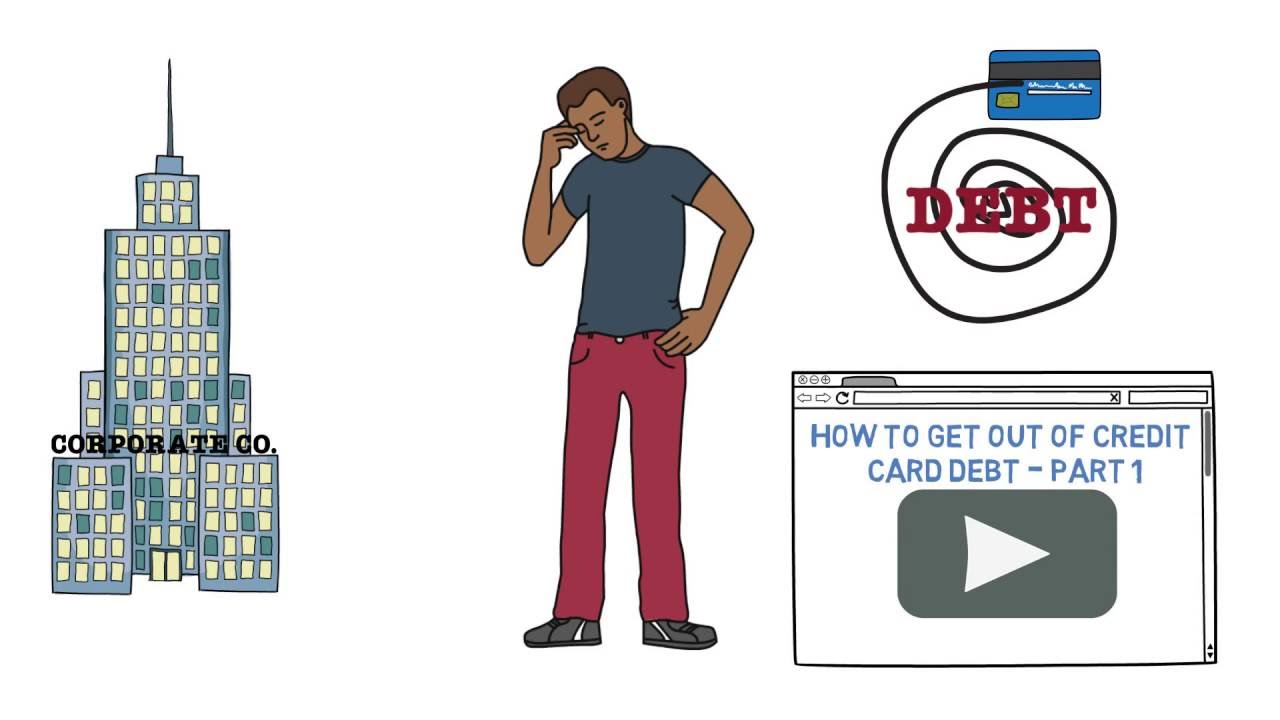
Meet Tom. Tom is a few years out college with a great
job and a lot credit card debt. Tom just watched our first video, “How to
Get Out of Credit Card Debt – Part 1”, so he understands that balance transfer credit
cards are a good debt management solution. Unfortunately, he just can’t qualify for
one with a big enough credit line. What should he do? Well, Tom’s not out of luck. He can instead use a personal loan pay off
his remaining credit debt. Personal loans are great. They come with fairly low credit score requirements,
generally around 640, and have interest rates lower than almost every credit card. Not only that, most modern personal lenders
will allow you to check your rates for free, without hurting your credit score.
In the end, these loans actually only have
one caveat, you just have to be sure their one-time setup costs are less than the interest
you’ll save by transferring. If this sounds confusing to you, don’t worry. We do the math for you on our website, plus
we teach you everything else you need to know in our video “Personal Loans 101” Finally, even if personal loans doesn’t
work, there are still a few more last resort options beyond asking your friends and family
for money: Option One: You could use the money from your
retirement accounts, like a 401(k) or an IRA. However, this option is problematic, as any
withdrawal before age 59 and a half with be subject to a 10% penalty, plus taxes, not
to mention raiding your retirement account is generally a bad long-term move.

Option Two: You could use a 401(k) loan, in
which you can borrow up to 50% of your current 401(k) contributions as a loan, up to a maximum
of $50,000. This definitely has advantages: there’s
no credit check, plus the interest rate will almost certainly be better than your credit
card. However, there are serious flaws to this loan
as well: not only are you prohibited from contributing to your 401(k) while the loan
is active, but if you leave your job, willingly or not, you’ll have only 60 days to repay
the loan, otherwise it’s considered an early withdrawal. Finally, we have Option Three: You could use
a HELOC, which is a revolving line of credit like a credit card, just much larger and secured
by a house. Again, this has advantages, mainly a lower
interest rate, but this is balanced by a major flaw: unlike a credit card, failure to repay
a HELOC can result in losing your home.
Finally, if none of our proposed solutions
have solved your problem, we highly recommend contacting the National Foundation for Credit
Counseling, or NFCC. They’re a nonprofit whose goal is to help
you avoid bankruptcy. To this end, they’ll create a personalized
payment plan for you and work with your lenders to both reduce your debt load and interest
rate. Hopefully you and Tom now have a better idea
of how to get out of credit card debt. If you want to see our balance transfer card
recommendations, your free credit score, or just more educational material, be sure to
check out our website!.