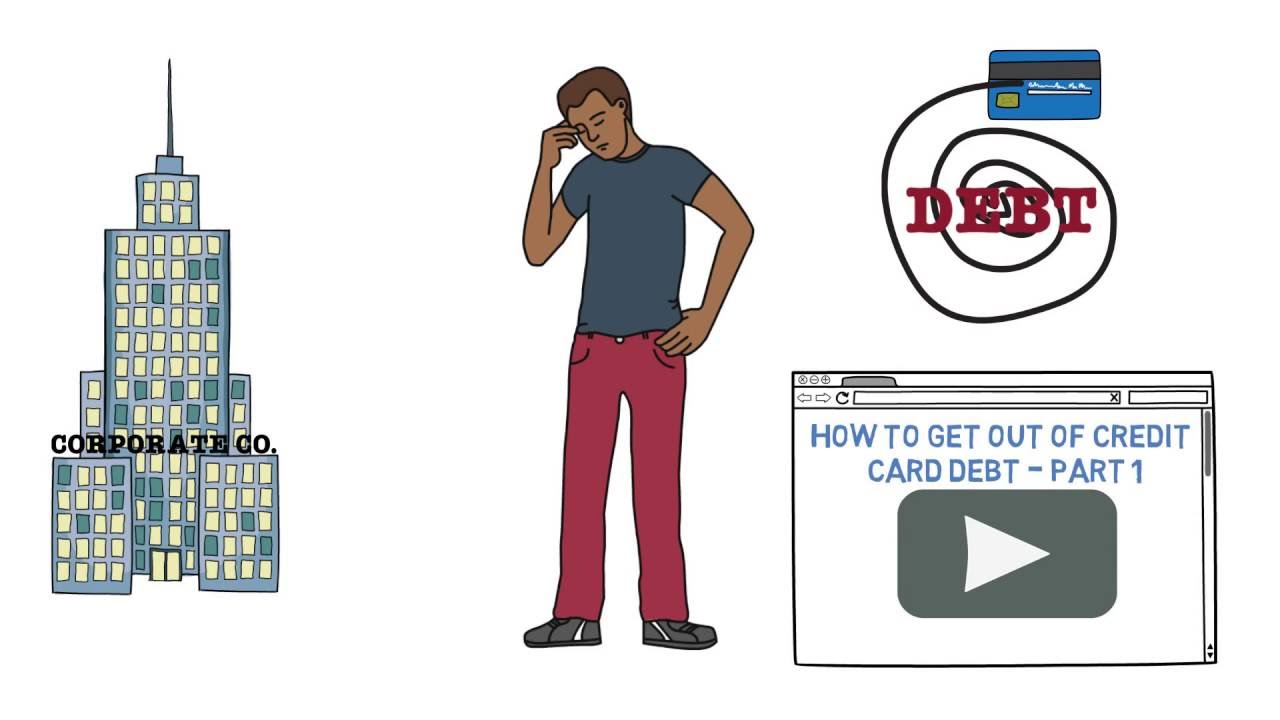
How to Get Out of Credit Card Debt: Other Options (Debt Management 3/4)

Meet Tom. Tom is a few years out college with a great
job and a lot credit card debt. Tom just watched our first video, “How to
Get Out of Credit Card Debt – Part 1”, so he understands that balance transfer credit
cards are a good debt management solution. Unfortunately, he just can’t qualify for
one with a big enough credit line. What should he do? Well, Tom’s not out of luck. He can instead use a personal loan pay off
his remaining credit debt. Personal loans are great. They come with fairly low credit score requirements,
generally around 640, and have interest rates lower than almost every credit card. Not only that, most modern personal lenders
will allow you to check your rates for free, without hurting your credit score.

In the end, these loans actually only have
one caveat, you just have to be sure their one-time setup costs are less than the interest
you’ll save by transferring. If this sounds confusing to you, don’t worry. We do the math for you on our website, plus
we teach you everything else you need to know in our video “Personal Loans 101” Finally, even if personal loans doesn’t
work, there are still a few more last resort options beyond asking your friends and family
for money: Option One: You could use the money from your
retirement accounts, like a 401(k) or an IRA. However, this option is problematic, as any
withdrawal before age 59 and a half with be subject to a 10% penalty, plus taxes, not
to mention raiding your retirement account is generally a bad long-term move.

Option Two: You could use a 401(k) loan, in
which you can borrow up to 50% of your current 401(k) contributions as a loan, up to a maximum
of $50,000. This definitely has advantages: there’s
no credit check, plus the interest rate will almost certainly be better than your credit
card. However, there are serious flaws to this loan
as well: not only are you prohibited from contributing to your 401(k) while the loan
is active, but if you leave your job, willingly or not, you’ll have only 60 days to repay
the loan, otherwise it’s considered an early withdrawal. Finally, we have Option Three: You could use
a HELOC, which is a revolving line of credit like a credit card, just much larger and secured
by a house. Again, this has advantages, mainly a lower
interest rate, but this is balanced by a major flaw: unlike a credit card, failure to repay
a HELOC can result in losing your home.

Finally, if none of our proposed solutions
have solved your problem, we highly recommend contacting the National Foundation for Credit
Counseling, or NFCC. They’re a nonprofit whose goal is to help
you avoid bankruptcy. To this end, they’ll create a personalized
payment plan for you and work with your lenders to both reduce your debt load and interest
rate. Hopefully you and Tom now have a better idea
of how to get out of credit card debt. If you want to see our balance transfer card
recommendations, your free credit score, or just more educational material, be sure to
check out our website!.
As found on YouTube

AMERICAS CREDIT CARD DEBT TOPPED $ 1 TRILLION FOR THE FIRST TIME THIS YEAR.

America's credit card debt topped $1 trillion for the first time this year in the United States despite being the richest nation on the planet there's a pervasive problem a growing epidemic that's quietly reached alarming proportions credit card debt has now breach the daunting threshold of $1 trillion for the very first time as per CNBC 37% of Americans rely on credit cards and debt to cover their monthly expenses and 61% of Americans are trapped into cycle of living paycheck to paycheck as credit card balances continue to grow it begs the question what is going on in America why are so many people falling behind in this video we will examine the intricate web that credit card debt weaves in the lives of many Americans but before we continue allow me to welcome you to another video of Finance sense where we cover all the latest trends in the financial markets and the economy so make sure to leave a like subscribe if you're new to our Channel and please click the notification Bell now without further Ado let's start the United States has recently set a troubling record regrettably it is not positive the nation's credit card debt has now climbed to an unprecedented level for the very first time in its history credit card debt held by Americans has soared to an astounding $1 trillion despite official assurances of a Slowdown in inflation the reality remains that prices persist at elevated levels this has led to a growing Reliance on credit cards to cover daily expenses notably the issue at hand takes on a noteworthy Dimension the typical American is more inclined to engage in discussions regarding politics and religion rather than address credit card debt an alarming statistic reveals that two out of five Americans find credit card debt profoundly embarrassing this situation holds negative implications as credit card debt is poised to impact the broader economy an indicator known as delinquency rates affirms this concern showing an upward trajectory delinquency rates denote instances when individuals fail to meet credit card payment deadlines indicating Financial stress such instances often signify a forboding sign for overall economic health our debt repayment hierarchy usually prioritizes mortgage loans followed by auto loans with credit card debt ranking last consequently this emerging scenario could potentially signal the outset of larger economic challenges individual aged 18 to 29 and 30 to 39 Stand Out Among those most vulnerable to credit card repayment difficulties already a distrusting statistic reveals that one out of every 10 credit card holders faces a delay of 90 days or more in repayment unfortunately the ongoing Persistence of inflation coupled with the looming possibility of heightened interest rates has driven individuals to increasingly open additional credit card accounts in order to manage daily expenses whether you find yourself dependent on credit cards or not the subject at hand holds significance for all the impact of credit card debt eventually reverberates across the entire spectrum of society a substantial portion of Americans exceeding a third experien embarrassment regarding their credit card debt this sentiment occasionally prompts individuals to conceal their financial obligations from their Partners a survey of 2,000 respondents demonstrated that 15% acknowledged spending Beyond levels their significant other would approve with an additional 9% conf in to maintaining hidden credit card debt this Dynamic might also shed light on the pivotal role Financial strain placed in divorces curiously enough it's individuals earning six figures or more who find themselves saddled with prolonged credit card debt the point is that credit card debt occupies a significant place in our thoughts eliciting concern across age groups and income brackets encouraging open discourse about this topic is important as it wields an impact not only on personal relationships but also in the broader National landscape a staggering 54 million individuals have grappled with credit card debt for a span of at least 12 months additionally nearly half constituting 47% of Americans possessing credit cards carry their debt from 1 month to the next the magnitude of this issue becomes apparent when considering that this year's credit card debt growth paralleled that of the stock market for instance this year Foo and ETF representing the S&P 500 registered a 177% increase concurrently credit card debt expanded by 16% this has significant implications reflecting on the historical average returns of the stock market which have ranged from 7 to 10% over a century the present search to 177% is an anomaly worth noting if you among the approximately 190 million individuals in the United States who possess a credit card and your balance hovers around the average of over $5,000 your debt might be growing in $10 with one of the fastest stock market expansions seen in recent times this alignment implies that making substantial savings or accumulating wealth could be unattainable even if you strive to offset your debt through investment although it's reassuring that 37% of Americans manag to clear their credit card balances every month 12% find themselves unable to do so resorting to only the minimum payments consider the impact of this scenario and the extensive duration required to pay off a mere $5,000 credit card balance assuming an average 22% annual percentage rate or APR paying this debt would span 281 months or 23 years accompanied by interest payments surpassing $85,000 depending on the methodology employed to calculate minimum payments and interest such as the 2% balance method used by certain credit card companies your initial $5,000 could increase into a staggering $48,000 of interest in over 106 years essentially this stat could cast a lifelong financial burden possibly even outpacing one's capacity to mitigate it should you find yourself entangled in such an unfortunate predicament consider these steps begin by contacting your card issuer and requesting a reduction in your annual percentage rate initiating this process might be as simple as dialing the number on the back of your credit card and inquiring about an APR adjustment while the reduction might not be substantial a slight decrease can offer assistance a additionally explore the possibility of securing a 0% interest balance transfer card these cards provide 12 15 or even 20 months during which transferred balances incur no interest upon obtaining one adopt a proactive approach to settle as much of the balance as feasible within the introductory span to capitalize on the interest free Advantage however be mindful of the conditions securing approval for such a card is a prerequisite but the potential benefit make the effort worthwhile for individuals carrying a credit card balance taking actions sooner rather than later is advised particularly with the impending growth of student loan interest in September by October 2023 student loan repayments are set to assume the introduction of the on-ramp leniency program offers a positive development as it grants a grace period to those who are late or have missed payments delaying immediate reporting to collection agencies however it's important to note that this program concludes on September 30th 2024 hence refraining from student loan payments under the assumption of no repercussions is not advisable given that interest will continue to accumulate during this interval on a brighter note a superior alternative exists in the form of the save program this program presents an opportunity to significantly reduce payments potentially even Down to0 based on family size moreover while participating in the safe program interest acral is halted securing participation necessitates submitting an application through student a.gov IDR meanwhile credit card debt is one indicator of a broader Trend as the United States has surpassed records in multiple areas household debt has surged to a new high of $17.1 trillion followed by Mortgage Debt at a record 12 trillion auto loans at an unprecedented $1.6 trillion and student loan debt at a Rec $1.6 trillion regrettably these are not Milestones to celebrate contributing to the concerns raised by economists regarding the possibility of an adverse economic downturn intriguingly examining debt as a proportion of disposable income engaging the relationship between Americans earnings and debt obligations yields relatively positive findings Americans possess disposable income that could be allocated toward reducing debt despite the noteworthy levels of debt reached in in the US predicting a recession remains uncertain similar to a coin toss with two potential outcomes hi it looks like you've reached the end of this video thank you for watching this far Please Subscribe and give a like if you enjoyed it and comment your thoughts in the comment section this is finance sense helping you keep up with all the latest trends in the financial markets and the economy see you around

As found on YouTube

How to Get Out of Credit Card Debt: Other Options (Debt Management 3/4)

Meet Tom. Tom is a few years out college with a great
job and a lot credit card debt. Tom just watched our first video, “How to
Get Out of Credit Card Debt – Part 1”, so he understands that balance transfer credit
cards are a good debt management solution. Unfortunately, he just can’t qualify for
one with a big enough credit line. What should he do? Well, Tom’s not out of luck. He can instead use a personal loan pay off
his remaining credit debt. Personal loans are great. They come with fairly low credit score requirements,
generally around 640, and have interest rates lower than almost every credit card.

Not only that, most modern personal lenders
will allow you to check your rates for free, without hurting your credit score. In the end, these loans actually only have
one caveat, you just have to be sure their one-time setup costs are less than the interest
you’ll save by transferring. If this sounds confusing to you, don’t worry. We do the math for you on our website, plus
we teach you everything else you need to know in our video “Personal Loans 101” Finally, even if personal loans doesn’t
work, there are still a few more last resort options beyond asking your friends and family
for money: Option One: You could use the money from your
retirement accounts, like a 401(k) or an IRA. However, this option is problematic, as any
withdrawal before age 59 and a half with be subject to a 10% penalty, plus taxes, not
to mention raiding your retirement account is generally a bad long-term move.

Option Two: You could use a 401(k) loan, in
which you can borrow up to 50% of your current 401(k) contributions as a loan, up to a maximum
of $50,000. This definitely has advantages: there’s
no credit check, plus the interest rate will almost certainly be better than your credit
card. However, there are serious flaws to this loan
as well: not only are you prohibited from contributing to your 401(k) while the loan
is active, but if you leave your job, willingly or not, you’ll have only 60 days to repay
the loan, otherwise it’s considered an early withdrawal. Finally, we have Option Three: You could use
a HELOC, which is a revolving line of credit like a credit card, just much larger and secured
by a house. Again, this has advantages, mainly a lower
interest rate, but this is balanced by a major flaw: unlike a credit card, failure to repay
a HELOC can result in losing your home. Finally, if none of our proposed solutions
have solved your problem, we highly recommend contacting the National Foundation for Credit
Counseling, or NFCC.

They’re a nonprofit whose goal is to help
you avoid bankruptcy. To this end, they’ll create a personalized
payment plan for you and work with your lenders to both reduce your debt load and interest
rate. Hopefully you and Tom now have a better idea
of how to get out of credit card debt. If you want to see our balance transfer card
recommendations, your free credit score, or just more educational material, be sure to
check out our website!.

As found on YouTube

Credit & Debt Consolidation : Increase Credit Rating

This is financial adviser Patrick Munro talking
about various ways to increase your credit rating. America operates on credit and the
better your rating is the better lifestyle you can have as long as you honor credit in
a responsible way. Credit is developed by a credit score. There are credit reporting
agencies that banks and financial institutions have set up so they can keep track of the
payment history of individuals out there in the market place. There are three credit reporting
agencies and if you have a credit challenge where you haven't paid a bill on time the
company or credit card company would report that to these various rating agencies and
depending on how that works out they will have a credit score. The better your credit
score is the better your chances of achieving future credit.

The ways to increase it is
don't maintain high balances on your credit cards. Pay them off as soon as possible. Make
sure that you always pay your credit card bill on time even if you're making a partial
payment. That's very key as well. And of course have access reserves built up in banks so
that they also report to the credit bureau as well showing that you're a good credit
risk. This is Patrick Munro talking about various ways to increase your credit rating..