My Debt Management Plan Experience

Hi! It's LaTisha from YoungFinances.com today
I'm going to talk a little bit more about how paid off my $22,000 worth of credit card
debt. I've had a couple of people ask me about the credit counseling service that I used
to help me pay off that debt and so I wanted to answer those questions today. The first question was how did I find them?
I know that there may be some credit counseling services out there that are not very reputable.
There are some that I've heard horror stories so I can completely understand this question.
A friend of mine introduced me to the service. They had great success with it and they
were able to pay off their debt within three years. The service that I used Is based out
of Atlanta. It's a consumer credit counseling service the name of the service is called
Clearpoint. That's the service I used to help me pay off all of my debt. Someone else asked
me, how much did it cost? I had to pay a monthly fee it was a small monthly fee.

I think one
month I paid $35 and then as my payments went down each month than I paid a smaller and smaller
monthly service fee to Clearpoint. So that actually goes hand-in-hand with the next question
which is what with my monthly bill? My monthly bill started off pretty high. I had a lot
of debt that I added to it. I had $26,000 of debt that I added to the debt management
plan. So what they do is they set you up with a debt management plan and help you to figure
out how to pay down your debt and pay off your debt within a certain timeframe whatever
timeframe that you want to do. Typically it's three years and I opted for three years. So what happened was when they were setting up my debt management plan I put all of my
debt on there like I said it was about $26,000 I realized I had doubled up on one creditor
because one of them was already in collections I had two people collecting on the same debt
so once I removed that debt it came down to about 22,000 and then I wanted to pay everything
off in three years so I wanted to make sure that after three years I was completely done
so we worked on a payment that was comfortable and something I was able to make along with making the rest of my payments that I had to make on my budget but something that
would also help me to pay off all the debt within three years.

So the payment that was
settled on at the beginning was $800 and I paid it every paycheck I paid $400 then after
a while it even things started to get a little bit tighter for me where I felt like I wasn't
able to really manage that so all I did was I gave them a call and let them know that
my budget has changed a little bit would they be willing to help me negotiate down to $600
a month and so we were able to work together to figure out how I could do that. I was able
to work with them and they help you create a budget.

That's one thing that they helped
me to do was create a budget to see what I could pay and how I can do this and really
get rid of my debt within three years that was very helpful. And then the last question
is what was the biggest advantage of working with Clearpoint? One of the biggest advantages
is that they contacted all of my creditors and negotiated my interest rates down. In
most cases they were able to negotiate the high interest rates that I had of 22% to 24% and
they were able to negotiate that down to 0% for a lot of my creditors they were also able
to help me remove some of the fees and get fee concessions for me. My debt was pretty
delinquent at the time so they were able to call and negotiate.

So they did all of the
negotiations for me in that instance whereas I might have been able to get some of that down but
and they were really good at that so that helped a lot. It really helped me to pay all of
that debt within three years. Another thing that they did was they were the contact person
for all of my creditors. If I had creditors calling and some of them I it were in
collections all I did was say "hey I'm working with a credit counseling service
and you can contact them if you have any questions or if you want to know what payments are available
to be made because they are handling it all." I don't know what it is not think of something
in the industry where if you're working with a credit counseling service the creditors
they just don't bother you they will call the credit counseling service.

So they called
the credit counseling service and Clearpoint was able to talk to them. I didn't have to worry
about being scared my phone ringing all the time and figuring out "Should pick it up or
not?" Because at the time and I had a lot of debt it was a point where it was very stressful
and I talked about that in the blog post on how I paid off my $22,000 of debt. It was very
stressful. Yeah so that was the biggest advantage them being able to save me a ton of money
on fees, they saving money on interest rates and they were able to contact and talk to
my creditors and be that liaison. So that's my experience with Clearpoint as a credit counseling
service like I said I used them to help me pay off my $22,000 worth of debt.

If you have debt and you
have more questions on how you can pay off debt, your options and maybe more questions
about debt feel free to contact me at YoungFinances.com or you can leave a comment in the box below
just fill it up with any and all of your questions and I will be sure to either answer them in
the comment section or create a video response for you. Make sure you head over to YoungFinances.com
where I've got more information on debt, building credit and getting your finances on the right
track so that you can become a financial success. And finally if you liked this video and it
gave you some good information, give it a thumbs-up! I really appreciate all the support from
you guys and hope to see you next time.

Ok bye..

As found on YouTube

Should You Invest or Payoff Credit Card Debt

A balanced approach to wealth management serves 
both today’s needs and tomorrow’s goals. For some,   that may mean paying off some debt today while 
simultaneously investing for the future.
  Of course, your own needs and circumstances 
will be unique. But hopefully, this video   can help you evaluate alternatives and find an 
approach that fits your situation and goals. If you have some extra cash flow each month, you 
might be wondering what the best thing to do with   it is: should you pay off debt, or should you 
instead invest? The answer can be complex, and   it varies depending on your financial situation. 
So, it’s crucial to consider where you are   financially, the rates of return you could expect 
with each option, and a variety of other factors.

So before you start putting money away toward 
either option, it’s essential to make sure you   have your financial basics covered. And 
the best way of doing this is to create a   budget if you don’t have one already so you 
can see how your monthly income is spent. Since your finances are finite. You, therefore,   have a limited amount of money to pay down 
debt, invest and cover your expenses. This   is why it’s important to learn what 
comes in and goes out each month. If you stick to your budget, you’ll have 
better control of your personal finances.   This will allow you to dedicate as much 
cash as possible towards each ‘category’,   thus increasing your net worth whilst 
building a solid financial plan.

Once you determine the amount you’re able to 
set aside for paying off debt or investing,   you’ll need to prioritise your options.  Investing is a way to set money aside for the 
future in an investment vehicle. Examples of   this include bonds, stocks or mutual funds. The 
great news is that, the value of these vehicles   will grow with time. On the other hand, debt 
represents money that you’ve spent already and   that your lender is charging you interest on. 
When this debt is left unpaid, it only grows   with interest charges adding to your balance 
and incurring interest charges on their own. In the case of investing, this is the rule 
of thumb: if you can earn more interest on   your money by investing it than your debts 
are costing you, then investing makes sense.   Another thing to consider is your risk 
tolerance. If you are comfortable taking   the gamble that your investments will depend on 
the rise and fall of the markets, then investing   is a better option as opposed to someone who’d 
be restless wondering how the market will be. When it comes to paying down debt, 
there are several good arguments   for opting to pay down debt rather than 
investing.

For one, your debt carries   a relatively high-interest rate. This is 
especially the case with credit card debt.   Another reason to pay down debt is your credit 
score, which is important if you’d like to borrow   money for a mortgage or get a loan on a car. 
If you have a low credit score you’re likely   to pay higher interest rates (that is if you 
can get a loan at all). Your credit score can   also affect other areas of your life. Some 
examples include the premiums you’ll pay for   insurance, whether you’ll be able to rent 
a place, or if an employer will hire you. Paying off debt – especially if you have lots   of it – can be the right way 
to go for that reason alone. Psychology is also a factor that comes into 
play. If your debts are making you lose sleep,   then you’d rather repay them even if you might 
get a better return on your money by investing.

When you think about it, paying down debt or 
investing doesn’t have to be an “either – or”   decision. Why not do both? Investing and 
paying off debt are essential financial goals. Your investments and your debt 
are elements of your net worth.   While your assets increase your net worth, 
your debts are dragging it down. Since your   focus should be increasing your net worth, you 
should aim to increase your assets and minimise   your debt at the same time. To do this, commit 
as much of your cash flow to fulfilling these   goals as possible, ideally all of your free cash 
flow after you factor in your necessary expenses. If you have high-interest rate credit card 
debt, focus on paying it off first.

If you   are investing when you have credit card debt, 
you are likely paying a higher rate on your   debt than you are earning via your investments. 
Unless you have a huge amount in investments,   you end up losing money overall. Some debts 
tend to be lower however, such as mortgages   and student loans which you don’t need to be as 
aggressive with those as with high-interest debts. How to start investing Investing your money is important to 
building wealth. But you need to make   certain you’re ready before you start 
using your cash to buy investments.   If you have a lot of credit card debt, you 
may not be in a position to invest much.

When you have a limited amount of money, you 
have to decide how best to use it to maximise   the return on investment it provides. In most 
cases, paying off credit card debt is going to   provide a better return on investment than just 
about anything else you could do with the money. The one exception to this is if your employer 
provides a 401(k)-matching contribution when   you invest in your workplace retirement plan. 
If your employer matches contributions you make,   that’s free money. The specific return 
you get will depend on the percentage   of contributions the company matches, but it’s 
common for employers to match 50% or a 100% of   contributions up to a certain percentage of your 
salary.

So, investing enough to earn the full   employer match could end up giving you a return on 
investment of around fifty to a hundred percent. Investing in your retirement account is often a 
good place to start. Experts recommend putting   at least 15% of your annual income towards 
your retirement. Whether you do this through   a work-sponsored retirement plan or an individual 
retirement account is up to you, but make sure   you’re never leaving any money on the table, such 
as from an untapped employer match to your 401(k). Retirement aside, the right investments 
for you will depend on your risk tolerance.   Stocks are generally riskier 
than bonds. To lighten the risk,   you can turn to mutual funds. They can 
help provide diversification among stocks,   bonds and other investments to reduce the 
risk from each one individually. Your risk   tolerance can be factored by income, age, 
lifestyle and when you’ll need the money. Carrying debt can be stressful, and if 
it negatively impacts your mental health,   you may want to prioritise paying debt 
down first. Debt can completely derail   your financial goals. It eats through 
your savings and can offset the gains   you make through investing.

On the other 
hand, you may have a better chance of   a bigger reward with smart investments, 
so you may decide that’s worth the risk. Keep in mind that investing doesn’t come 
with guaranteed growth. Any average or   likely rates of return you may see are 
often based on long-term performance;   you may experience higher highs, 
and lower lows in the short term. If you choose to invest, by no means should 
you stop paying off your debt entirely. You   should aim to at least make your minimum 
monthly payments before you put any spare   cash toward investments. You really don’t 
want to miss your minimum payments. Think   of your minimum debt payments as fixed 
expenses. After regular living expenses,   minimum debt payments should be the 
next priority.

Failing to do so,   could lower your credit card score making 
it harder to qualify for future loans. The younger you are when you start investing, 
the more time you have for your investments   to grow. However, there’s no guarantee 
that you’ll make money when you invest,   as the market can be volatile. If 
you’re relying on an increased balance   within a short amount of time, you might be 
disappointed.

Whichever decision you make,   your decision is never set in stone. You can 
always switch up your budget if your financial   situation changes or if you’re unsatisfied 
with how you’re currently allocating your   money. The important thing is that you’re 
taking charge of your financial future. Make sure you have an emergency fund 
in place before you use extra money to   contribute to these goals. An emergency fund 
should contain between three to six months’   worth of expenses that can protect 
you in case unexpected costs come up. Without a financial safety net, you’re one 
unexpected medical bill, car accident or surprise   expense away from even more debt. Some people, 
particularly those worried about income loss,   prefer building a large cushion of cash for 
emergencies first over paying down extra debt. By using automatic deposits, you can create 
an investment plan and stick to it over time,   treating your investments as part of your 
fixed budget. Your safety net will give you   some financial breathing room, and before you know 
it, you’ll be making progress toward retirement,   a down payment on a house, college for 
your kids or whatever goal you had in mind.

As you approach saving, investing and paying 
off debt, keep in mind that it doesn’t have to   be all or nothing. You don’t just have to focus 
on one thing at a time. If you do, it could end   up taking longer to start working on each of 
your goals, which could delay your success. The best path to long term financial 
sustainability is paying off debt and   investing at the same time. This approach will 
help you improve your financial discipline,   and will ensure that all of your hard-earned cash   takes you one step closer to achieving 
your financial goals one cent at a time. Try and find a balance between everything.

While 
it can take a little longer to achieve each goal   this way, it can give you a more well-rounded 
financial foundation and pay off in the long run. When making decisions about 
debt reduction and investing,   keep in mind that the need to 
eventually pay off principal   is certain, but investment returns are not. 
Investment performance will vary over time,   and it’s possible to experience losses as well 
as gains. At the same time, it’s well known that   investors who start earlier can benefit 
from compounding and time in the market. But there aren’t any magic numbers. That’s 
why it’s important to work with your financial   advisor to create an investment strategy that 
fits your financial expectation for the future. Having some extra cash is an enviable situation 
to be in. When making decisions about debt and   investing, be a long-term thinker: Think 
about the position you want to be in the   next ten or so years.

Then evaluate what 
actions today will be most effective in   helping you achieve your long-term 
financial goals. Whether to invest   or pay down your debts is a decision only you 
can make. Whichever you choose is better than   merely spending it. You’ll be in a better 
financial situation than you were in before. If you’re interested in getting my savings 
and budgeting guide or retirement guide,   click on the link in the descriptions. Well, thank you all so much for watching, if you 
found this video helpful, be sure to give it a   thumbs up and subscribe to our channel for 
more tips on how to improve your finances. Until next time, take care!.

As found on YouTube

10 Debt Management Techniques You Need to Know for Early Debt Free Life | 🦉#debtmanagement

are you tired of feeling overwhelmed by debt do you dream of a future free from Financial stress well you're in the right place welcome to Cashwise owl your trusted source for mastering personal finance today we're diving into a topic that affects millions of people around the world debt management if you're ready to take control of your financial future and break free from the chains of debt then stick around in this video we're going to share 10 debt management techniques that can help you achieve your goals and live a life of Financial Freedom but before we get started make sure to grab a pen and paper because you'll want to take notes on these valuable strategies and don't forget to watch till the end to fully understand each technique and how it can transform your financial situation let's get started the first step in effective debt management is understanding your debt take stock of all your debts including cluding the total amount owed interest rates and minimum monthly payments this comprehensive overview will serve as the foundation for developing your debt repayment strategy a pro tip here is take advantage of free credit reports from all three major credit bureaus to get a comprehensive overview of your debts including any inaccuracies or discrepancies understanding the full scope of your debt will Empower you to make informed decisions as you create your payment plan once you have a clear understanding of your debt it's time to create a debt payoff plan there are various strategies you can use such as the debt snowball method or the debt Avalanche method choose the approach that aligns best with your financial goals and prioritize paying off highin debts first a pro tip here is consider using a debt payoff calculator to explore different repayment scenarios and determine the most efficient strategy for your situation by visualizing your progress and adjusting your plan as needed you can stay motivated and on track to becoming debt-free setting realistic goals is crucial for staying motivated throughout your debt repayment Journey break down your total debt into smaller manageable goals and celebrate each Milestone along the way this incremental approach will help you stay focused and maintain momentum as you work towards becoming debt-free a pro TI here is break down your debt payoff goals into smaller milestones and reward yourself for achieving each one whether it's treating yourself to a small Indulgence or celebrating with friends and family acknowledging your progress will keep you motivated and focused on your ultimate goal of Financial Freedom to accelerate your debt repayment progress consider cutting expenses and increasing your income look for areas where you can trim your budget such as d in out less frequently or cancelling subscription Services additionally explore opportunities to boost your income through side hustles or freelance work a pro tip here is challenge yourself to find creative ways to reduce your expenses such as negotiating lower bills or finding more affordable alternatives for everyday purchases additionally explore opportunities to generate extra income through freelance work or monetizing your hobbies to allocate more funds towards debt repayment don't hesitate to reach out to your creditors and negotiate lower interest rates many creditors are willing to work with borrowers who demonstrate a commitment to repaying their debts a lower interest rate can significantly reduce the total amount you'll pay over time saving you money in the long run a pro tip here is be proactive in contacting your creditors and highlighting your positive payment history and Financial stability by demonstrating your commitment to repaying your debts you may be able to negotiate lower interest rates or more favorable repayment terms saving you money in the long run debt consolidation can be an effective strategy for simplifying your debt repayment process by combining multiple debts into a single loan with a lower interest rate you can streamline your payments and potentially reduce your monthly payments however it's essential to weigh the pros and cons of debt consolidation carefully a pro tip here is before consolidating your debts carefully evaluate the terms and conditions of the consolidation loan to ensure it aligns with your financial goals and budget consider factors such as interest rates fees and repayment terms to determine if consolidation is the right option for you take advantage of balance transfer offers to consolidate high-interest credit card debt onto a card with a lower or 0% introductory APR this can provide temporary relief from high interest rates and give you time to focus on paying down your debt without acre additional interest charges a pro tip here is pay close attention to the balance transfer fee and the length of the introductory APR period when considering balance transfer offers aim to pay off your transferred balance before the promotional period ends to maximize savings on interest charges if you're feeling overwhelmed by your debt or struggling to make progress on your own don't hesitate to seek professional help credit counseling agencies and financial advisors can provide personalized guidance and support to help you develop a debt management plan that works for your unique situation a pro tip here is research reputable credit counseling agencies and financial advisers who specialize in debt management they can provide personal guidance and support to help you develop a debt management plan tailored to your unique situation debt management is a marathon not a Sprint stay committed to your debt repayment plan and be patient with yourself as you work towards your goals remember that every payment brings you one step closer to Financial Freedom and the sacrifices you make today will pay off in the long run a pro tip here is stay committed to your debt repayment plan and and be patient with yourself as you work towards your goals celebrate small victories along the way and remind yourself of the long-term benefits of becoming debt-free finally don't forget to celebrate your successes along the way eyeing off debt is no small feat and each Milestone deserves recognition treat yourself to a small reward when you reach a debt repayment goal to stay motivated and inspired on your journey to becoming debt-free a pro tip here is set aside a portion of your budget for small Rewards or treats When You Reach debt repayment Milestones celebrating your progress will help you stay motivated and inspired on your journey to Financial Freedom there you have it 10 debt management techniques with Pro tips to help you take control of your financial future by understanding your debt creating a repayment plan and staying disciplined in your approach you can overcome Financial challenges and achieve your goals remember it's never too late to start managing your debt and building a brighter financial future thanks for watching Cashwise owl don't forget to like share and subscribe for more valuable insights on mastering personal finance until next time happy budgeting

As found on YouTube

How to Get Out of Credit Card Debt: The Basics (Debt Management 2/4)

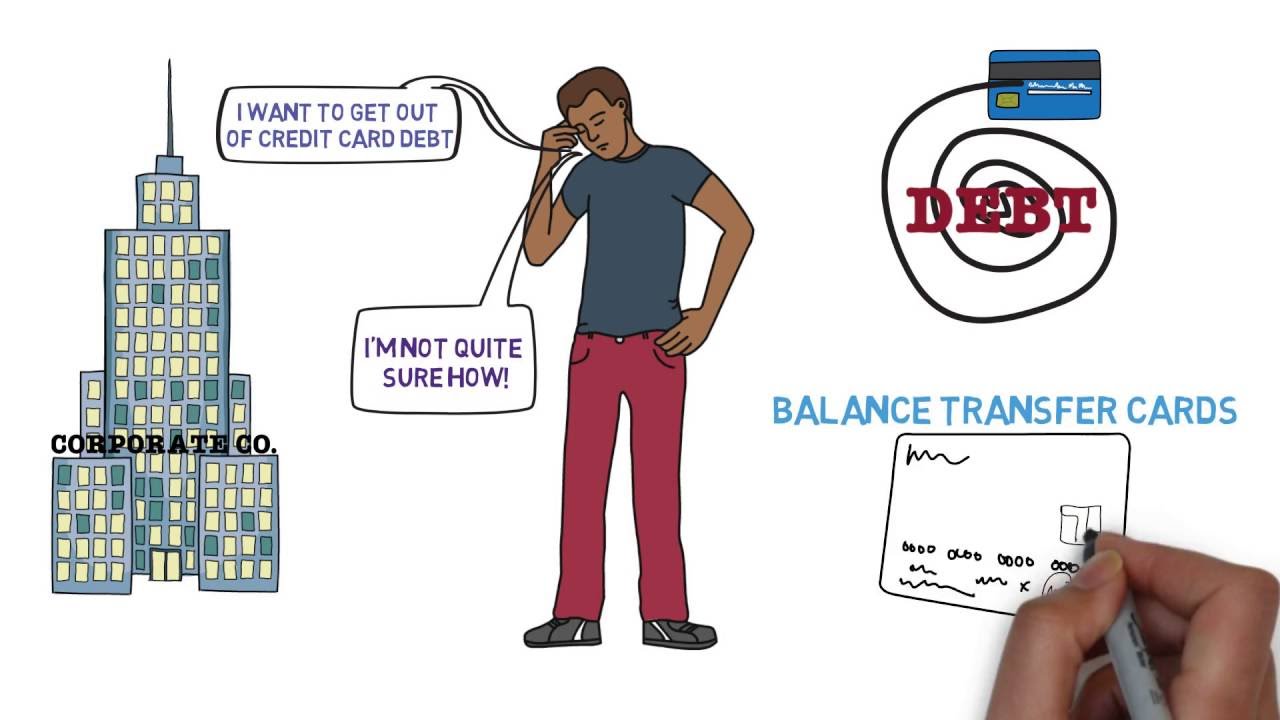
Meet Tom. Tom is a few years out college with a great
job and a lot credit card debt. Tom wants to get out of debt, but isn’t
quite sure how. Luckily for Tom, there exists a great solution
to his problem: balance transfer cards. However, before we continue, if Tom doesn’t
have a firm understanding of what a credit card or credit score is, or how to effectively
use either, we highly recommend watching our three videos “Credit Cards 101,” “Credit
Scores and Reports 101,” and “Credit Cards: Mistakes and Best Practices” before continuing
further. But let’s get back to the matter at hand. What is a balance transfer? Well, a balance transfer is simply the act
of transferring an existing credit balance to another credit card.

Most credit cards aren’t good this for:
they’ll immediately start charging interest on the transferred balance, plus a fee, generally
about 3-5% of the transferred balance. However, there is a specific subset of credit
cards, called balance transfer cards, that won’t immediately start charging interest,
instead giving Tom a 15-21 month window of 0% APR to pay off his balance interest-free. This is a great deal, but let’s still walk
through the steps you’ll need to take to get one: Step 1: Before doing anything, make a debt
repayment plan, ideally using our free recommended website, and rank your credit cards by interest
rate, as no matter what you end up doing, you’ll always want to tackle the highest
interest rate debt first.

Step 2: Once that’s done, call your credit
card company and try to get them to lower your APR. Emphasize that if they don’t agree, you’ll
move your balance to another company offering lower rates. Step 3: If the call fails and you still want
to transfer, keep in four three things. One: You’ll need good credit to get a balance
card. Two: You can’t transfer a balance to a card
offered by your current bank. Three: Depending of the size of your debt,
you may not be able to pay it off by the end of the promotional period, so have a plan
for that. And Four: The credit line on your balance
transfer card may be below your total debt load, meaning you’ll either have to:
Apply for a second balance transfer card Keep the remaining debt on your current card
and pay the high rate. Or use a personal loan, which is slightly
more expensive than a balance transfer card, but comes with a lower credit score requirement. And don’t worry, we’ll cover this option
in our next video. However let’s assume for now that Tom has
been approved for a balance transfer card with a high enough credit limit.

This is an important first step, but they’re
still a few more things to keep in mind: One: Don’t spend on the card, as the 0%
APR period may not extend to purchases. Two: Complete the transfer as fast as possible
or the 0% APR offer may expire. Three: Be careful about consolidate multiple
balances onto one card, as that will lower your credit score.

Four and Finally: Once you’ve completed
the transfer, always pay on time and don’t close out your old accounts, as failing to
follow either will lower your credit score. Hopefully you and Tom now better understand
balance transfer cards. Be sure to check out our next video, where
we’ll teach you how to get out of credit card debt without them, and be sure to website,
where you can find more educational content, your free credit score, and great credit card
recommendations..

As found on YouTube

Understanding Debt in 2 Minutes

Understanding debt in 2 minutes. Part one: Private debt. People and businesses take on private debt because they want to buy something today and pay for it in the future. For example, buying a home or factory with a loan gives people access to a property before they generate the income to pay for it, and in this case the building itself can be used as security to be seized if the borrower doesn't repay the lender. This is widely seen as good debt as everybody benefits but if for example property prices fall
and the security is worth less than the loan, as happened before the crash of
2008, and if the borrower doesn't have the income to repay, it becomes bad debt
where somebody is bound to lose out.

People on low income needing to borrow
for current consumption, like food, can rarely offer any security, and with such
a high risk of a bad debt, rates of interest on so-called payday loans for example can be massive. Debt often gets a bad name but nearly all innovation, art, medicine, and food production requires upfront spending before income can be achieved. And it's debt that can help people without wealth to create some. Part two: Public debt. Public debt is essentially the government's overdraft. The total amount borrowed which is still outstanding. Government borrow to spread the cost of current projects across future years and hope to achieve long-term benefits for their future populations, solve medium-term fluctuations in their economic activity, and fix short-term economic crises. And because governments don't retire or die and particularly as big governments
already own a lot of assets as security and can always increase their income by raising taxes from the private sector they are seen as credit worthy and trusted to borrow large sums over long periods of time by issuing bonds and hoping that future growth or indeed inflation will reduce their debt over
time.

So even with massive debts the United States government is able to keep
on borrowing while smaller countries require the
support of development banks and backup from agencies such as the IMF if they
are going to borrow anything at all. Get more from The Open University, Check out the links on screen now..

As found on YouTube

Become Debt Free with a Debt Management Plan

What is a Debt Management Plan? And how does it work? Courtesy of
Golden State Debt Management www.goldendebt.org The term “Debt Management Plan” also known
as a DMP is a program that assists in the payment of unsecure debt using the help of a credit counseling agency Some debts that are included in a DMP are Credit cards, Collections accounts, Medical bills, Personal loans, Department store cards, Repossessions Some debts such as a payday loan and secured
debts i.e. car payment and mortgage are not eligible for a DMP. Some benefits of a DMP are consolidated bills
into one monthly payment, Eliminating of late and over the limit fees, Lower interest rate,
Ongoing financial education support, Pay off debt faster. Living with high debt can be overwhelming
and stressful, but it doesn’t have to be. Take control of your debt and reach out to
one of our certified credit counselors for a free financial consultation today
We will have an expert go through your expenses, income and debts, and create a customized
plan for managing your debt If you qualify for a DMP, we will work together
with your creditors to help waive fees, reduce your interest rate, and help you achieve an
affordable, single monthly payment.

Take advantage of our free financial consultation
and get started on becoming debt free. Call us today. Golden Debt Management
800-397-1302 www.goldendebt.org.

As found on YouTube

How to Get Out of Credit Card Debt: Other Options (Debt Management 3/4)

Meet Tom. Tom is a few years out college with a great
job and a lot credit card debt. Tom just watched our first video, “How to
Get Out of Credit Card Debt – Part 1”, so he understands that balance transfer credit
cards are a good debt management solution. Unfortunately, he just can’t qualify for
one with a big enough credit line. What should he do? Well, Tom’s not out of luck. He can instead use a personal loan pay off
his remaining credit debt. Personal loans are great. They come with fairly low credit score requirements,
generally around 640, and have interest rates lower than almost every credit card. Not only that, most modern personal lenders
will allow you to check your rates for free, without hurting your credit score.

In the end, these loans actually only have
one caveat, you just have to be sure their one-time setup costs are less than the interest
you’ll save by transferring. If this sounds confusing to you, don’t worry. We do the math for you on our website, plus
we teach you everything else you need to know in our video “Personal Loans 101” Finally, even if personal loans doesn’t
work, there are still a few more last resort options beyond asking your friends and family
for money: Option One: You could use the money from your
retirement accounts, like a 401(k) or an IRA. However, this option is problematic, as any
withdrawal before age 59 and a half with be subject to a 10% penalty, plus taxes, not
to mention raiding your retirement account is generally a bad long-term move.

Option Two: You could use a 401(k) loan, in
which you can borrow up to 50% of your current 401(k) contributions as a loan, up to a maximum
of $50,000. This definitely has advantages: there’s
no credit check, plus the interest rate will almost certainly be better than your credit
card. However, there are serious flaws to this loan
as well: not only are you prohibited from contributing to your 401(k) while the loan
is active, but if you leave your job, willingly or not, you’ll have only 60 days to repay
the loan, otherwise it’s considered an early withdrawal. Finally, we have Option Three: You could use
a HELOC, which is a revolving line of credit like a credit card, just much larger and secured
by a house. Again, this has advantages, mainly a lower
interest rate, but this is balanced by a major flaw: unlike a credit card, failure to repay
a HELOC can result in losing your home.

Finally, if none of our proposed solutions
have solved your problem, we highly recommend contacting the National Foundation for Credit
Counseling, or NFCC. They’re a nonprofit whose goal is to help
you avoid bankruptcy. To this end, they’ll create a personalized
payment plan for you and work with your lenders to both reduce your debt load and interest
rate. Hopefully you and Tom now have a better idea
of how to get out of credit card debt. If you want to see our balance transfer card
recommendations, your free credit score, or just more educational material, be sure to
check out our website!.

As found on YouTube