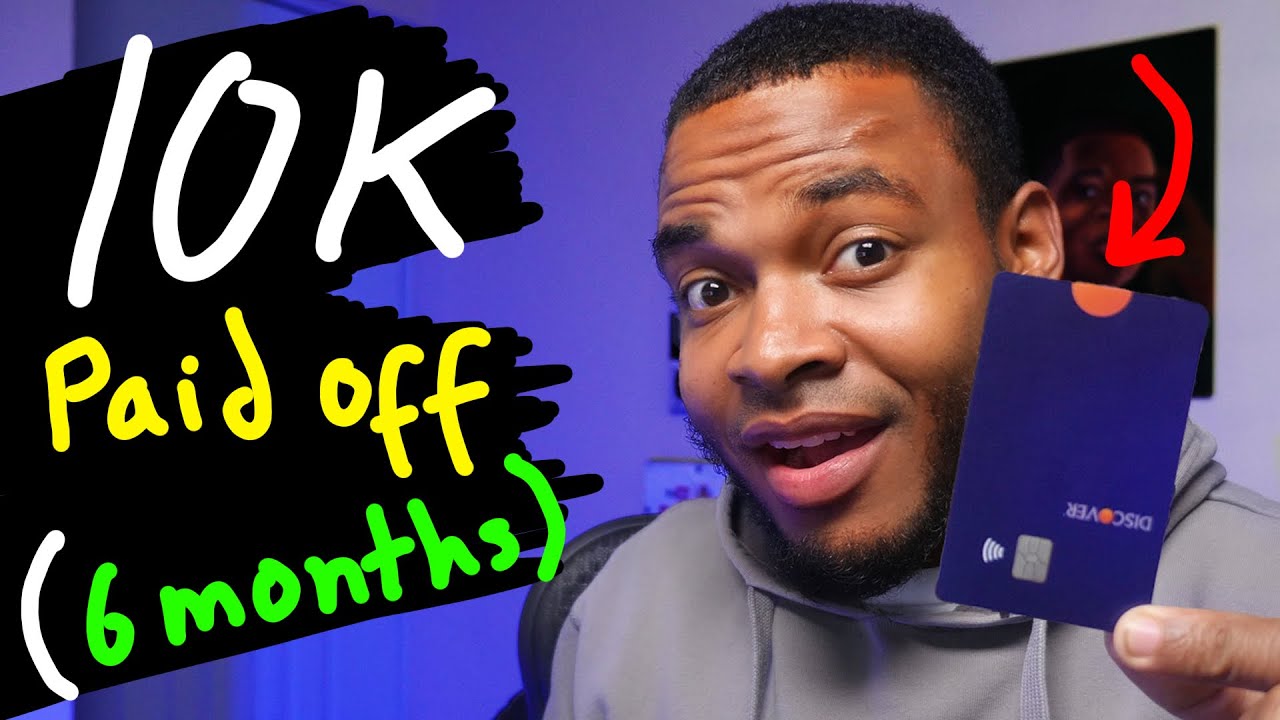
The Problem With 0% Interest Debt On Balance Transfer Cards

so let's say for example you have right now a $5,000 credit card okay that's the balance on this card you're paying 25% interest annually and that's about a $100 minimum payment every single month you're actually responsible for paying now all of a sudden by Magic you actually get an offer in the mail from a balance transfer credit card and you're like yo it must have been my luck it's not luck it's marketing your information has been sold thus the company knows about it and thus now they're sending you offers Direct offers to you now the offer says this we're going to give you 21 months to transfer your debt over to us and you get to pay it off in 21 months and we won't charge you any interest whatsoever for those first 21 months and you might say well this sounds like a great deal over here I'm paying for example a 100 bucks per month in interest but over here I'm going to be paying Z in interest for the first 21 months this saves me a bunch of money and the only catch is you have to pay a 3% fee for the entire balance transfer now that's not a big deal because right now you're paying $100 as a minimum payment and when you take 3% of 5,000 that's only about $150 or so so it's really not a big deal so why is this attractive what is the problem with it and what exactly is a balance transfer credit card I'm going to go into all the details in this video now do me a favor guys and ask you smash the like button I appreciate it a ton now the first thing is this guys okay a balance transfer credit card I'm not going to complicated it's basically just a credit card that is designed to actually get people that are in debt in some way to transfer their debt over to this credit card and potentially that company be the one that's actually going to get all that interest from you going further it's kind of like a long-term investment okay they're actually betting that you're not going to to pay it off in that introductory period and the TR going to keep the balance and you're going to continue to pay them and pay them and pay them and yes it could actually turn against them if you actually pay but for the most part they get 3% outright and if you don't pay them well you might become a customer for something else you might get another credit card with them or another product or a loan or a mortgage whatever it is okay they have a customer a prospect to get other things that is what a balance transfer is actually good for it now what is the problem here Tommy I still don't understand okay they're giving me an offer if I'm smart and I take advantage of it I walk away without paying any interest isn't that great well the answer is this okay you might think that you're actually going to walk away dilly dally free okay but what happens is usually this what's actually going on when you actually open up a Balan transfer credit card whether it's an offer whether you've been pre-approve approval whatever you just basically you basically just opened up another line of credit that is what's actually going on so let's say for example you have credit card a you owe $5,000 a year and now you actually get pre-approved for a balance for a credit card and then you basically apply and then say hey we're actually going to give you a balance of or a credit line of $7,000 and you say well that's awesome that's more than I had over here so now you say I want to transfer the balance from credit CR card a over to credit card B your new card the balance transer card and by the way it doesn't have to be a credit card it could also be for example Hospital loans it could be any debt overall even Collections and they could actually just basically pay that off by sending them a check and basically now you're in here and the debt is over here that's the whole idea okay so what happens is this okay you say I want to transfer balance from this card over to here they say okay just pay us a 3% fee you pay the 3% fee that's $150 they sent over a check to your credit card okay now that's fully paid off the balance on credit card a is basically zero the balance on your new balance crit card is basically um $5,000 or whatever the balance here basically was that's the idea now what actually happened here okay you went from having a credit line of $5,000 to having a credit line of basically $122,000 remember so if you got in value so far I'm going to ask for a favor subscribe to the channel because only like 20% of the people that watch or actually subscrib so go ahead and subscribe right now cuz I have a lot more content and having a credit line of basically $112,000 remember they actually gave you $7,000 and you have 21 months to pay that off okay without any interest and you might think this is awesome okay what I'm going to do is basically pay this off and never look back but what usually happens is this and I'm sad to say this okay but what usually happens is this okay you have credit card a now which is basically empty and you have credit card B all right and what happens is basically you say well this one is free you start using it again okay and before you know it this goes right back up to 5,000 or 3,000 or 4,000 and this one you're barely making any real payments or any Dent to it remember they gave you 5,000 the balance transfer credit card is still a credit card you can still use it to buy stuff and it still gave you $2,000 extra dollars and you actually need it so now you might use that for some things else okay and before you know it the 21 months have gone by and now you owe over $110,000 overall you owe credit card a you also go owe credit card B credit card B is saying yep we got them now we're actually collecting interest payments every single month from you and credit card a is saying well he paid it off but now he's back to pay now so I guess we win also so what is the right way to go about this and Tommy how have you ever done this the answer is I owed about wait for it $133,000 in credit card debt and I actually used balance transfer credit cards to actually help me clear all the debt now I was not one of the people that actually went ahead and basically clear credit card a transfer to credit card B and then build up a balance back in credit card a what I did was this I follow this three step system okay the first step is you want to set for yourself some really real istic goals based on how long they're actually going to give you interest free so overall let's say I actually owe $5,000 right that's how much I actually owe I'm going to divide this number by how many months you're actually going to give me so divided by 21 in this in this case by the way what credit card am I actually talking about I'm actually talking about the city Simplicity balance transfer credit card that offer 21 months to pay interest free 0% APR and even 12 12 months to actually buy things and not get charged any interest obviously they're doing this for a reason you transfer the balance over you get 21 months to pay it off but you also get 12 months to buy other crap and actually build up even a bigger balance don't be stupid don't fall for that okay so now I know that per month I need to pay about $240 to be debt free in21 months okay that's the idea and that's how I would actually do it now for me personally I would say well if if this is actually very doable I would stick to it if it's actually a little bit less than I can basically do I would actually lower it and basically even if I end with the balance okay at least I was actually realistic okay now for me personally I actually paid more towards it to be able to pay it off a lot faster I actually paid off $133,000 in credit card debt in 12 months okay because I actually fell for that trap where discover sent me a credit card and they were like Hey we're going to give you I think 18 months of purchase free interest and I went crazy okay I went crazy and what happened is I maxed out everything then it was like um I think it was 18 months right so I spent like 6 months doing some crazy stuff and then I had 12 months and I was like yo I need to pay all this in 12 months and I basically was able to cover everything in 12 months I think at a point I to transfer balance over to the balance transer card but I was actually able to do it which actually saved me a ton of money but it was only because I was smart so step number two is basically once you transfer the balance well close credit card a all right close it because you don't want to be at risk at rebuilding this actual um credit line and to actually get into double the debt you actually want to clear that and then lastly all right the balance CH credit card don't use it to get into more debt only use it to actually pay off the debt fast and be done with it and once you're done with all the debt my advice would be a 100% just close to to credit cards overall and don't get back into those problems okay ever since I became debt free and I don't have any credit cards I have no method no way of getting into debt anymore so it's not something I worry about but as long as you have that possibility that availability to watch you say I'm going to use this credit card for this or that for this emergency or that emergency you're always going to be going back into debt and going right back into where you landed I think the Bible says a dog is always going to return to his vomit and that's just disgusting okay so if debt is actually getting you into trouble over and over again and you're going back to it well that's just stupid and nonsense okay you actually want to avoid that so yes okay understand what they're trying to do they're trying to get you to bring your balance over to hopefully spend more money to be trapped with them and to pay them a bunch of interest but if you're smart what you're actually going to do is say I'm going to use you and I'm going to take advantage fully I'm going to close credit card a and once I'm done with you I'm also going to close you and I'm going to be done with it so set for yourself achievable goals so you're actually able to do this as fast as possible guys thanks for watching as always like subscribe hit the Bell sh notified there are obviously other balance of credit cards out there so if you know a few of them comment them down below if you want a full video on the offers out there let me know and I'll actually get to work up here is another video and this video is actually made possible by the supporters over at patreon here is a list of their names I appreciate it a ton if you actually want to join us on patreon support the channel the link is going to be down below thanks for watching as always like subscribe hit the Bell so you get notified peace

As found on YouTube

Should You Invest or Payoff Credit Card Debt

A balanced approach to wealth management serves 
both today’s needs and tomorrow’s goals. For some,   that may mean paying off some debt today while 
simultaneously investing for the future.
  Of course, your own needs and circumstances 
will be unique. But hopefully, this video   can help you evaluate alternatives and find an 
approach that fits your situation and goals. If you have some extra cash flow each month, you 
might be wondering what the best thing to do with   it is: should you pay off debt, or should you 
instead invest? The answer can be complex, and   it varies depending on your financial situation. 
So, it’s crucial to consider where you are   financially, the rates of return you could expect 
with each option, and a variety of other factors.

So before you start putting money away toward 
either option, it’s essential to make sure you   have your financial basics covered. And 
the best way of doing this is to create a   budget if you don’t have one already so you 
can see how your monthly income is spent. Since your finances are finite. You, therefore,   have a limited amount of money to pay down 
debt, invest and cover your expenses. This   is why it’s important to learn what 
comes in and goes out each month. If you stick to your budget, you’ll have 
better control of your personal finances.   This will allow you to dedicate as much 
cash as possible towards each ‘category’,   thus increasing your net worth whilst 
building a solid financial plan.

Once you determine the amount you’re able to 
set aside for paying off debt or investing,   you’ll need to prioritise your options.  Investing is a way to set money aside for the 
future in an investment vehicle. Examples of   this include bonds, stocks or mutual funds. The 
great news is that, the value of these vehicles   will grow with time. On the other hand, debt 
represents money that you’ve spent already and   that your lender is charging you interest on. 
When this debt is left unpaid, it only grows   with interest charges adding to your balance 
and incurring interest charges on their own. In the case of investing, this is the rule 
of thumb: if you can earn more interest on   your money by investing it than your debts 
are costing you, then investing makes sense.   Another thing to consider is your risk 
tolerance. If you are comfortable taking   the gamble that your investments will depend on 
the rise and fall of the markets, then investing   is a better option as opposed to someone who’d 
be restless wondering how the market will be. When it comes to paying down debt, 
there are several good arguments   for opting to pay down debt rather than 
investing.

For one, your debt carries   a relatively high-interest rate. This is 
especially the case with credit card debt.   Another reason to pay down debt is your credit 
score, which is important if you’d like to borrow   money for a mortgage or get a loan on a car. 
If you have a low credit score you’re likely   to pay higher interest rates (that is if you 
can get a loan at all). Your credit score can   also affect other areas of your life. Some 
examples include the premiums you’ll pay for   insurance, whether you’ll be able to rent 
a place, or if an employer will hire you. Paying off debt – especially if you have lots   of it – can be the right way 
to go for that reason alone. Psychology is also a factor that comes into 
play. If your debts are making you lose sleep,   then you’d rather repay them even if you might 
get a better return on your money by investing.

When you think about it, paying down debt or 
investing doesn’t have to be an “either – or”   decision. Why not do both? Investing and 
paying off debt are essential financial goals. Your investments and your debt 
are elements of your net worth.   While your assets increase your net worth, 
your debts are dragging it down. Since your   focus should be increasing your net worth, you 
should aim to increase your assets and minimise   your debt at the same time. To do this, commit 
as much of your cash flow to fulfilling these   goals as possible, ideally all of your free cash 
flow after you factor in your necessary expenses. If you have high-interest rate credit card 
debt, focus on paying it off first.

If you   are investing when you have credit card debt, 
you are likely paying a higher rate on your   debt than you are earning via your investments. 
Unless you have a huge amount in investments,   you end up losing money overall. Some debts 
tend to be lower however, such as mortgages   and student loans which you don’t need to be as 
aggressive with those as with high-interest debts. How to start investing Investing your money is important to 
building wealth. But you need to make   certain you’re ready before you start 
using your cash to buy investments.   If you have a lot of credit card debt, you 
may not be in a position to invest much.

When you have a limited amount of money, you 
have to decide how best to use it to maximise   the return on investment it provides. In most 
cases, paying off credit card debt is going to   provide a better return on investment than just 
about anything else you could do with the money. The one exception to this is if your employer 
provides a 401(k)-matching contribution when   you invest in your workplace retirement plan. 
If your employer matches contributions you make,   that’s free money. The specific return 
you get will depend on the percentage   of contributions the company matches, but it’s 
common for employers to match 50% or a 100% of   contributions up to a certain percentage of your 
salary.

So, investing enough to earn the full   employer match could end up giving you a return on 
investment of around fifty to a hundred percent. Investing in your retirement account is often a 
good place to start. Experts recommend putting   at least 15% of your annual income towards 
your retirement. Whether you do this through   a work-sponsored retirement plan or an individual 
retirement account is up to you, but make sure   you’re never leaving any money on the table, such 
as from an untapped employer match to your 401(k). Retirement aside, the right investments 
for you will depend on your risk tolerance.   Stocks are generally riskier 
than bonds. To lighten the risk,   you can turn to mutual funds. They can 
help provide diversification among stocks,   bonds and other investments to reduce the 
risk from each one individually. Your risk   tolerance can be factored by income, age, 
lifestyle and when you’ll need the money. Carrying debt can be stressful, and if 
it negatively impacts your mental health,   you may want to prioritise paying debt 
down first. Debt can completely derail   your financial goals. It eats through 
your savings and can offset the gains   you make through investing.

On the other 
hand, you may have a better chance of   a bigger reward with smart investments, 
so you may decide that’s worth the risk. Keep in mind that investing doesn’t come 
with guaranteed growth. Any average or   likely rates of return you may see are 
often based on long-term performance;   you may experience higher highs, 
and lower lows in the short term. If you choose to invest, by no means should 
you stop paying off your debt entirely. You   should aim to at least make your minimum 
monthly payments before you put any spare   cash toward investments. You really don’t 
want to miss your minimum payments. Think   of your minimum debt payments as fixed 
expenses. After regular living expenses,   minimum debt payments should be the 
next priority.

Failing to do so,   could lower your credit card score making 
it harder to qualify for future loans. The younger you are when you start investing, 
the more time you have for your investments   to grow. However, there’s no guarantee 
that you’ll make money when you invest,   as the market can be volatile. If 
you’re relying on an increased balance   within a short amount of time, you might be 
disappointed.

Whichever decision you make,   your decision is never set in stone. You can 
always switch up your budget if your financial   situation changes or if you’re unsatisfied 
with how you’re currently allocating your   money. The important thing is that you’re 
taking charge of your financial future. Make sure you have an emergency fund 
in place before you use extra money to   contribute to these goals. An emergency fund 
should contain between three to six months’   worth of expenses that can protect 
you in case unexpected costs come up. Without a financial safety net, you’re one 
unexpected medical bill, car accident or surprise   expense away from even more debt. Some people, 
particularly those worried about income loss,   prefer building a large cushion of cash for 
emergencies first over paying down extra debt. By using automatic deposits, you can create 
an investment plan and stick to it over time,   treating your investments as part of your 
fixed budget. Your safety net will give you   some financial breathing room, and before you know 
it, you’ll be making progress toward retirement,   a down payment on a house, college for 
your kids or whatever goal you had in mind.

As you approach saving, investing and paying 
off debt, keep in mind that it doesn’t have to   be all or nothing. You don’t just have to focus 
on one thing at a time. If you do, it could end   up taking longer to start working on each of 
your goals, which could delay your success. The best path to long term financial 
sustainability is paying off debt and   investing at the same time. This approach will 
help you improve your financial discipline,   and will ensure that all of your hard-earned cash   takes you one step closer to achieving 
your financial goals one cent at a time. Try and find a balance between everything.

While 
it can take a little longer to achieve each goal   this way, it can give you a more well-rounded 
financial foundation and pay off in the long run. When making decisions about 
debt reduction and investing,   keep in mind that the need to 
eventually pay off principal   is certain, but investment returns are not. 
Investment performance will vary over time,   and it’s possible to experience losses as well 
as gains. At the same time, it’s well known that   investors who start earlier can benefit 
from compounding and time in the market. But there aren’t any magic numbers. That’s 
why it’s important to work with your financial   advisor to create an investment strategy that 
fits your financial expectation for the future. Having some extra cash is an enviable situation 
to be in. When making decisions about debt and   investing, be a long-term thinker: Think 
about the position you want to be in the   next ten or so years.

Then evaluate what 
actions today will be most effective in   helping you achieve your long-term 
financial goals. Whether to invest   or pay down your debts is a decision only you 
can make. Whichever you choose is better than   merely spending it. You’ll be in a better 
financial situation than you were in before. If you’re interested in getting my savings 
and budgeting guide or retirement guide,   click on the link in the descriptions. Well, thank you all so much for watching, if you 
found this video helpful, be sure to give it a   thumbs up and subscribe to our channel for 
more tips on how to improve your finances. Until next time, take care!.

As found on YouTube

How to Get Out of Credit Card Debt: The Basics (Debt Management 2/4)

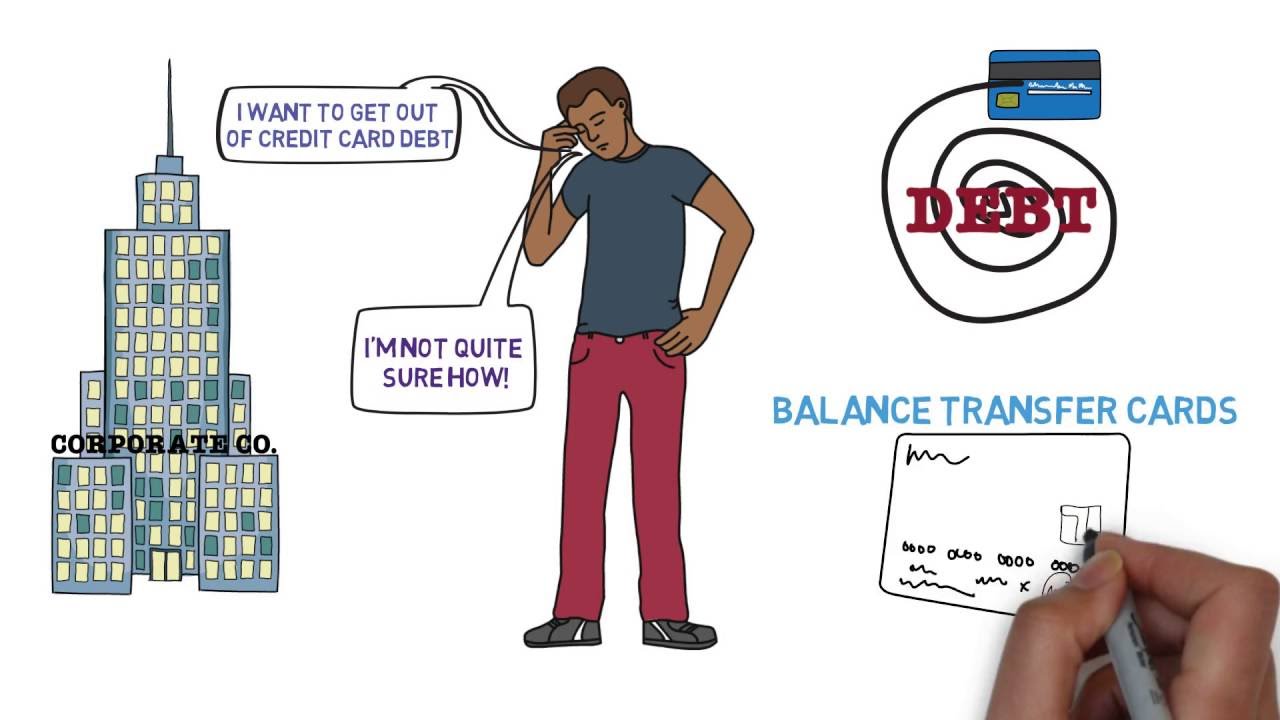
Meet Tom. Tom is a few years out college with a great
job and a lot credit card debt. Tom wants to get out of debt, but isn’t
quite sure how. Luckily for Tom, there exists a great solution
to his problem: balance transfer cards. However, before we continue, if Tom doesn’t
have a firm understanding of what a credit card or credit score is, or how to effectively
use either, we highly recommend watching our three videos “Credit Cards 101,” “Credit
Scores and Reports 101,” and “Credit Cards: Mistakes and Best Practices” before continuing
further. But let’s get back to the matter at hand. What is a balance transfer? Well, a balance transfer is simply the act
of transferring an existing credit balance to another credit card.

Most credit cards aren’t good this for:
they’ll immediately start charging interest on the transferred balance, plus a fee, generally
about 3-5% of the transferred balance. However, there is a specific subset of credit
cards, called balance transfer cards, that won’t immediately start charging interest,
instead giving Tom a 15-21 month window of 0% APR to pay off his balance interest-free. This is a great deal, but let’s still walk
through the steps you’ll need to take to get one: Step 1: Before doing anything, make a debt
repayment plan, ideally using our free recommended website, and rank your credit cards by interest
rate, as no matter what you end up doing, you’ll always want to tackle the highest
interest rate debt first.

Step 2: Once that’s done, call your credit
card company and try to get them to lower your APR. Emphasize that if they don’t agree, you’ll
move your balance to another company offering lower rates. Step 3: If the call fails and you still want
to transfer, keep in four three things. One: You’ll need good credit to get a balance
card. Two: You can’t transfer a balance to a card
offered by your current bank. Three: Depending of the size of your debt,
you may not be able to pay it off by the end of the promotional period, so have a plan
for that. And Four: The credit line on your balance
transfer card may be below your total debt load, meaning you’ll either have to:
Apply for a second balance transfer card Keep the remaining debt on your current card
and pay the high rate. Or use a personal loan, which is slightly
more expensive than a balance transfer card, but comes with a lower credit score requirement. And don’t worry, we’ll cover this option
in our next video. However let’s assume for now that Tom has
been approved for a balance transfer card with a high enough credit limit.

This is an important first step, but they’re
still a few more things to keep in mind: One: Don’t spend on the card, as the 0%
APR period may not extend to purchases. Two: Complete the transfer as fast as possible
or the 0% APR offer may expire. Three: Be careful about consolidate multiple
balances onto one card, as that will lower your credit score.

Four and Finally: Once you’ve completed
the transfer, always pay on time and don’t close out your old accounts, as failing to
follow either will lower your credit score. Hopefully you and Tom now better understand
balance transfer cards. Be sure to check out our next video, where
we’ll teach you how to get out of credit card debt without them, and be sure to website,
where you can find more educational content, your free credit score, and great credit card
recommendations..

As found on YouTube

Should You Consolidate Your Debt?

– Multiple credit cards, high balances, high interest rates, high stress levels. You've been making payments
over a long period of time, but it doesn't seem to have
put a dent in your debt. Perhaps, you're even
considering the dreaded B word. But, before you go that far, you may be considering something
called debt consolidation. – What is debt consolidation? It's simply taking two or more accounts and
combining them into one. And, that's where you'd
make your payments. – Well, that sounds good. Simplifying makes things easier right? Not always – Consolidating your debt
may mean less paperwork, but that doesn't mean it's
the best path out the woods. – There are several different
ways to combine your balances and you should understand
the good and bad of each before you decide what's right for you. (lively music) – One way to consolidate debt is to simply transfer the
balance from one credit card to another.

Credit card companies are
often happy to do this since it means you'll
get in deeper with them. Many will offer a variety of promotions, 0% APR over the course of
anywhere between 12 to 18 months. Some will offer an
extended promotion date, but at a slightly higher interest rate. Transfer fees are common. So, be sure to factor that in. – This sounds like a pretty simple way to get some immediate relief, but beware of the fine print. Most of these deals
involve deferred interest which means that you're
still accruing interest on your balance during the
whole promotional period. When the promotion expires, you are charged all of
that accumulated interest despite the number of
payments you've made. Yikes. – Another way to consolidate debt is through a personal loan. You get a loan from a bank, use it to pay off all your credit cards, and then make payments to the bank.

Sounds simple. Again, there are some hitches. – First of all, your credit has to be in a favorable condition
to actually get approved. If you've been struggling to make payments on multiple cards, which you probably are if you're considering consolidation, then it'll be pretty hard to get a loan. And, even if you do, the
terms probably won't be great. This route only makes sense if you can get a lower APR on the loan than you have on the cards. – Also, this method can
be very risky for someone who has trouble restraining
their urge to spend. Suddenly having several
wide open credit cards may be too much temptation.

There are many cases where consumers have taken out a loan to pay
off all their credit card debt just to turn around and run
the cards right back up. – The third option is to
seek the help of a company that specializes in debt settlement. It may sound attractive
to let someone else handle all the messy details, but you should definitely
know how it works. – First, they ask you to
stop paying all your debts and instead start making payments into a special savings account.

Once there's enough there,
they take that money and negotiate a payoff with
each of your creditors, typically much lower than
the full amount you owe them. So, what are the downsides? – First, their fee, which can be as high as 25% of your total debt. Second, since you're effectively
defaulting on your loans, your credit score will get hammered. And, third, they may
not even be successful. If they can't reach an agreement with one or more of your creditors, you'll still be on the
hook for the full amount with all the fees and
damage to your credit. – Maybe, none of these sound
like great options to you.

Well, there's good news. Many people actually have greater success by not consolidating their debt. It may sound nice to
simplify your payments, but the psychological effect
of having one giant loan can be very intimidating. At a time when you need
discipline and optimism, you feel discouraged and hopeless. – By keeping debts separate and focusing on one at a time, you can get a feeling of
accomplishment and pride with each closed account, which can go a long way
to keeping you motivated.

It's all about knowing what
works best for your personality. – If you decide to keep
your debts separate, you can negotiate directly
with your creditors for some leniency, often called hardship programs. These policies were
developed to assist consumers that are struggling with
making on time payments. If qualified, the creditors
will lower your monthly payment and interest rate, no defaulted accounts, no wasted money paying a company to do what you can do yourself.

But, there are some hurdles. – You may have to prove that you are actually facing a hardship. Shop-aholism doesn't count. Think family emergencies,
job losses, pay cuts, or medical illness, and you may need
documentation to prove it. Once in the program, the lender will either close
or freeze your account. They may also lower your credit limit. If this results in a high
utilization percentage, the proportion between what you owe and the total you can borrow, you are likely to see a
decrease in your scores. – In the end, there's no one right way to handle debt. The important thing is that you know what you're getting into and that you know yourself – Your personal strengths and weaknesses will determine how well
each option would work.

So, you need to take an
honest look at yourself before making a decision. – [All] And, that's our two cents. – [Female Narrator] Thanks to our patrons for keeping Two Cents financially healthy. Click the link in the description to become a Two Cents patron. – If you want more strategies
for dealing with debt check out our video, What's the Fastest Way to Pay Off Debt? (lively music).

As found on YouTube

The Problem With 0% Interest Debt On Balance Transfer Cards

so let's say for example you have right now a $5,000 credit card okay that's the balance on this card you're paying 25% interest annually and that's about a $100 minimum payment every single month you're actually responsible for paying now all of a sudden by Magic you actually get an offer in the mail from a balance transfer credit card and you're like yo it must have been my luck it's not luck it's marketing your information has been sold thus the company knows about it and thus now they're sending you offers Direct offers to you now the offer says this we're going to give you 21 months to transfer your debt over to us and you get to pay it off in 21 months and we won't charge you any interest whatsoever for those first 21 months and you might say well this sounds like a great deal over here I'm paying for example a 100 bucks per month in interest but over here I'm going to be paying Z in interest for the first 21 months this saves me a bunch of money and the only catch is you have to pay a 3% fee for the entire balance transfer now that's not a big deal because right now you're paying $100 as a minimum payment and when you take 3% of 5,000 that's only about $150 or so so it's really not a big deal so why is this attractive what is the problem with it and what exactly is a balance transfer credit card I'm going to go into all the details in this video now do me a favor guys and ask you smash the like button I appreciate it a ton now the first thing is this guys okay a balance transfer credit card I'm not going to complicated it's basically just a credit card that is designed to actually get people that are in debt in some way to transfer their debt over to this credit card and potentially that company be the one that's actually going to get all that interest from you going further it's kind of like a long-term investment okay they're actually betting that you're not going to to pay it off in that introductory period and the TR going to keep the balance and you're going to continue to pay them and pay them and pay them and yes it could actually turn against them if you actually pay but for the most part they get 3% outright and if you don't pay them well you might become a customer for something else you might get another credit card with them or another product or a loan or a mortgage whatever it is okay they have a customer a prospect to get other things that is what a balance transfer is actually good for it now what is the problem here Tommy I still don't understand okay they're giving me an offer if I'm smart and I take advantage of it I walk away without paying any interest isn't that great well the answer is this okay you might think that you're actually going to walk away dilly dally free okay but what happens is usually this what's actually going on when you actually open up a Balan transfer credit card whether it's an offer whether you've been pre-approve approval whatever you just basically you basically just opened up another line of credit that is what's actually going on so let's say for example you have credit card a you owe $5,000 a year and now you actually get pre-approved for a balance for a credit card and then you basically apply and then say hey we're actually going to give you a balance of or a credit line of $7,000 and you say well that's awesome that's more than I had over here so now you say I want to transfer the balance from credit CR card a over to credit card B your new card the balance transer card and by the way it doesn't have to be a credit card it could also be for example Hospital loans it could be any debt overall even Collections and they could actually just basically pay that off by sending them a check and basically now you're in here and the debt is over here that's the whole idea okay so what happens is this okay you say I want to transfer balance from this card over to here they say okay just pay us a 3% fee you pay the 3% fee that's $150 they sent over a check to your credit card okay now that's fully paid off the balance on credit card a is basically zero the balance on your new balance crit card is basically um $5,000 or whatever the balance here basically was that's the idea now what actually happened here okay you went from having a credit line of $5,000 to having a credit line of basically $122,000 remember so if you got in value so far I'm going to ask for a favor subscribe to the channel because only like 20% of the people that watch or actually subscrib so go ahead and subscribe right now cuz I have a lot more content and having a credit line of basically $112,000 remember they actually gave you $7,000 and you have 21 months to pay that off okay without any interest and you might think this is awesome okay what I'm going to do is basically pay this off and never look back but what usually happens is this and I'm sad to say this okay but what usually happens is this okay you have credit card a now which is basically empty and you have credit card B all right and what happens is basically you say well this one is free you start using it again okay and before you know it this goes right back up to 5,000 or 3,000 or 4,000 and this one you're barely making any real payments or any Dent to it remember they gave you 5,000 the balance transfer credit card is still a credit card you can still use it to buy stuff and it still gave you $2,000 extra dollars and you actually need it so now you might use that for some things else okay and before you know it the 21 months have gone by and now you owe over $110,000 overall you owe credit card a you also go owe credit card B credit card B is saying yep we got them now we're actually collecting interest payments every single month from you and credit card a is saying well he paid it off but now he's back to pay now so I guess we win also so what is the right way to go about this and Tommy how have you ever done this the answer is I owed about wait for it $133,000 in credit card debt and I actually used balance transfer credit cards to actually help me clear all the debt now I was not one of the people that actually went ahead and basically clear credit card a transfer to credit card B and then build up a balance back in credit card a what I did was this I follow this three step system okay the first step is you want to set for yourself some really real istic goals based on how long they're actually going to give you interest free so overall let's say I actually owe $5,000 right that's how much I actually owe I'm going to divide this number by how many months you're actually going to give me so divided by 21 in this in this case by the way what credit card am I actually talking about I'm actually talking about the city Simplicity balance transfer credit card that offer 21 months to pay interest free 0% APR and even 12 12 months to actually buy things and not get charged any interest obviously they're doing this for a reason you transfer the balance over you get 21 months to pay it off but you also get 12 months to buy other crap and actually build up even a bigger balance don't be stupid don't fall for that okay so now I know that per month I need to pay about $240 to be debt free in21 months okay that's the idea and that's how I would actually do it now for me personally I would say well if if this is actually very doable I would stick to it if it's actually a little bit less than I can basically do I would actually lower it and basically even if I end with the balance okay at least I was actually realistic okay now for me personally I actually paid more towards it to be able to pay it off a lot faster I actually paid off $133,000 in credit card debt in 12 months okay because I actually fell for that trap where discover sent me a credit card and they were like Hey we're going to give you I think 18 months of purchase free interest and I went crazy okay I went crazy and what happened is I maxed out everything then it was like um I think it was 18 months right so I spent like 6 months doing some crazy stuff and then I had 12 months and I was like yo I need to pay all this in 12 months and I basically was able to cover everything in 12 months I think at a point I to transfer balance over to the balance transer card but I was actually able to do it which actually saved me a ton of money but it was only because I was smart so step number two is basically once you transfer the balance well close credit card a all right close it because you don't want to be at risk at rebuilding this actual um credit line and to actually get into double the debt you actually want to clear that and then lastly all right the balance CH credit card don't use it to get into more debt only use it to actually pay off the debt fast and be done with it and once you're done with all the debt my advice would be a 100% just close to to credit cards overall and don't get back into those problems okay ever since I became debt free and I don't have any credit cards I have no method no way of getting into debt anymore so it's not something I worry about but as long as you have that possibility that availability to watch you say I'm going to use this credit card for this or that for this emergency or that emergency you're always going to be going back into debt and going right back into where you landed I think the Bible says a dog is always going to return to his vomit and that's just disgusting okay so if debt is actually getting you into trouble over and over again and you're going back to it well that's just stupid and nonsense okay you actually want to avoid that so yes okay understand what they're trying to do they're trying to get you to bring your balance over to hopefully spend more money to be trapped with them and to pay them a bunch of interest but if you're smart what you're actually going to do is say I'm going to use you and I'm going to take advantage fully I'm going to close credit card a and once I'm done with you I'm also going to close you and I'm going to be done with it so set for yourself achievable goals so you're actually able to do this as fast as possible guys thanks for watching as always like subscribe hit the Bell sh notified there are obviously other balance of credit cards out there so if you know a few of them comment them down below if you want a full video on the offers out there let me know and I'll actually get to work up here is another video and this video is actually made possible by the supporters over at patreon here is a list of their names I appreciate it a ton if you actually want to join us on patreon support the channel the link is going to be down below thanks for watching as always like subscribe hit the Bell so you get notified peace
As found on YouTube

Credit card debt in US reaches new record

That's no secret. The pandemic and inflation have hit our wallets, and as a result, Americans are charging more to their credit cards. Billions more. But what does that mean for our economy? And what's the best way to get out of debt? Treleven Sarah Makowitz has the answers from experts. Pandemic restrictions have eased, but a lot of the inflated prices that came as a result have stuck around, pushing Americans to swipe, swipe and swipe again. All of this has led to a new record high of nearly $1 trillion in credit card debt nationwide. That's rising by over $60 billion in the last quarter of 2022.

But how did we get here? Economists and financial planners have some ideas. On the fourth quarter of last year, it finally surpassed the pre pandemic. Americans are paying more for everything, and they've tapped and in many cases now depleted their savings. They feel like they have no place to turn but credit card swiping the credit card to pay for life. So we know that our plastic is carrying more. But what does all this debt mean for our economy? Interest rates are rising and that that's going to affect business investment and consumer spending decisions. But so far, consumers still seem enthusiastic about spending and. And buying things and willing to run up their credit card debt. If you're someone battling this debt right now, eventually that Bill is going to come in. But Jen will says you might want to be careful before you open up another credit card for more spending.

The best advice I can give is never use a credit card to pay for a want. The average interest rate right now, we're told, is over 19%. Find those introductory offers, those 0% introductory offers where you can move balances for a short period of time. But don't do it unless you have a plan to snowball and really attack that debt. As for what's next, there's no guarantee, but Gen. Wealth advises you plan for what you can control. What matters most is not the economy, but your economy. And figuring out your budgets is more important than what's going on in 2023 in the US economy. And while we are seeing inflation begin to slow down, economists say the high prices aren't going anywhere anytime soon.

Reporting. I'm Sarah horback lowitz. Sarah, thank you now. Well, overall, FICO credit scores continue to trend up through 2021. According to the data company Experian, many scores in Southern states, including Arkansas, are worse than the national average..

As found on YouTube

How To Pay Off 10k In Credit Card Debt | In 12 Months

So paying off debt, it's
gonna sound stupid, give me a chance. Paying off debt is
not just about having some money and sending it
over to pay off debt, right? It kind of sounds
like that is what it is, but paying off debt is
also about staying out of debt. Having a system so
when you pay things off, you pay them off
efficiently because a lot of folks, they pay something
off, they go back into debt. They start paying things off and then
they'll be like, "Hey, it's not going down.

I'm not understanding it. I pay this, this, this, this, but the balance every month
is going up and up and up." And it doesn't make sense, okay? So in this video, I'll
teach you how I was able to pay off $13,000 in credit
card debt in about 12 months, okay? And not just that, I
paid off a total amount in my debt-paying career
of about $70,000, all right? So in this video, you
know exactly all the techniques I used to be able to pay
that off as fast as possible. And if you guys don't
know me, my name is Tommy Bryson. If you know me,
welcome back to the channel.

Now, as always, do me a
favor and also smash the like button. Now, the very first
thing, guys, is going to be this. If you want to pay off
debt, it's not just about grabbing the extra money you have left
over and putting it towards debts. No, it's about budgeting and finding
all the money possible to pay the debt off. And here's what I mean, you know? A lot of folks, they
live paycheck to paycheck.

I get paid $3,000, I spend $3,000. Next month, I
can't wait for that paycheck. And if I can find $100 or
$200, I'll send that over to my debt payments, but that's
why you never actually finish. So what you actually want
to do is you want to get a budget. The budget is
going to help you find money to actually pay the debt off even faster. Here's what you want to do. You want to open up or
start up right now a baseline budget. It's my little budget
that I actually made up and it's very functional
and it makes a lot of sense. Okay. You want to have
basically, write this down. You want to have an account for
your shelter costs, utilities, groceries, transportation, healthcare, and also fun. Those are usually going
to be the six most important expenses and the ones
you can't really negotiate on. But it's not just that, okay? Because that would just
basically liberate you from saying, and justify, because I spend
so much money on rent or whatever.

No. You want to limit your shelter
expense to 33% of your monthly income. On top of that,
utilities, only gas, water, electricity, internet
bill, and also your phone bill. Your phone bill should not be more
than 30 bucks per month and your internet bill should not be more
than 80 bucks per month. Okay. That is it. Tell me how. I pay $6 for my phone bill. They exist. I have a video on it. The link is going to be down
below or just search up on YouTube. Tommy Brice and phone
bill, and you will find a video. When it comes to food, no
more than 200 to 250 per person max. How do you do this? You cook at home and you don't
spend money on trash on the streets. Tragitation. If you have a car,
make sure it's paid off. If it's not paid off, well, you
consider selling it because that's important, but you're only paying for
gas, insurance, and maintenance. And some car washes every now and then. Those are going to be your core expenses. Then you also have health insurance. If you have that,
if you don't consider it.

And on top of that, you're
also going to have your fun expense. Okay. Take at least five to 10% of your money every time you get
paid and have fun with it. Tommy, I'm trying to pay off debt. I don't have fun for this. I want it to be exciting every time
you get paid because you look forward to it because you get money
for fun, but you also look forward to it because
you're actually getting debt free. It will be slower. You can cut this out,
but I highly recommend you don't because it actually helps
make the whole journey a lot more bearable.

So basically, if you make 3000, now
you're only spending about $2,000 with this budget and you
have $1,000 left, that's the money you're going
to use to pay off debt. But obviously, I'll
give you the system later. Number two is going to be this guy's. Okay. You actually want to
get extra cash or paying off debts by selling things
you don't need around your home. This is the most fun I had. And it's also the most
embarrassing part of this entire system. Okay. Because so if you got a value
so far, I'm going to ask for a favor. Subscribe to the
channel because only like 20% of the people
that watch our actions scribe. So go ahead and subscribe right now
because I have a lot more content and it's also the most embarrassing
part of this entire system.

Okay. Because for me, my identity
for a long time was what I wore. The sneakers I
had, the clothes I had, and when I wanted to get
debt free, I sold everything. I sold, I had 23 pairs of sneakers. At the end of it, I
kept about like nine to eight pairs and I sold my
consoles, my gaming consoles. I sold basically everything I had and
I use all the extra money to pay off debt. That's how I did it. Okay. So if you can sell the things around
your home and you can keep, for example, 500 or 200 bucks, that's money
you're going to use to pay debt.

And by the way, going back up when I
told you about that baseline budget, whatever is not included in that,
you obviously want to cut it out. If you want to buy,
for example, something that you don't need, use your
fund money to actually do it. I think that's clear, but I
wanted to make it even crystal clear. Now, number three guys is you want to
get extra cash to pay off debt by hustling. Now, the good thing is
I'm only asking you to get a job or hustle with a minimum
pay of at least $15 per hour. Okay. If you can't get
that, then try to find someone else, but I recommend
like at least 15 bucks per hour.

And you might say, Tommy, I
don't have the time, but you do. And here's how you sleep eight hours. You work eight hours. You spend on showering food
and driving about three hours a day. That's a total of about 19 hours a day. You still have a free
five hours every single day. So if you do the math, okay, if
you're able to actually make $15 an hour and you work five extra hours per day, I
don't let you know, like a hustle or whatever. The answer is about like 75 bucks a day. Time is five, only
like five times a week you actually do this because
you rest on Saturdays and Sundays. The answer is going
to be every single month. That's an extra $1,500 to pay off debt. I mean, that is awesome. That is a lot of money to pay that off. You can basically be done with 10K
in a short amount of time, just with this. Okay. $10,000 divided by 1,500. That's going to be like in
six months, you're almost debt free. That's the idea. Now here's the fourth part.

Tommy, okay. I budgeted, I sold things, I'm hustling. How do I pay the debt off? There are two methods. One I did, and I don't recommend. What I did not do, and I do recommend, sounds strange,
sounds crazy, but it's very true. The one I did was
basically the avalanche method. Okay. Avalanche method says this, okay. You want to organize your debt from the highest interest rate
to the lowest interest rate. You want to pay
the minimum balance on all of your debts and
grab all the extra money you actually have and pay the
debt with the highest interest rate.

Tommy, how do I
find out my interest rates? You call the debt people. Okay. Who do you owe money to? Call them and ask
them what is my interest rate? Okay. Why do you do this one, Tommy? Because it saves you the most money mathematically because
you're paying the debt that's costing you the most money. Okay. Why don't you recommend it? Because it can take a long time to see progress because your
highest interest debt could be the one with the highest balance and it can take a long
time to actually pay that off and it can feel like
you're not making progress. That's why I recommend the one I
didn't do, which is basically the snowball method. This method says this, okay. You organize your debt from the
lowest balance to the highest balance, not the interest rate,
doesn't matter, and you pay the minimum on all
the debts and you put all of the extra money towards
the debt with the lowest balance. Okay. That means on your first run, your first month, you can
easily be debt free on one of these accounts.

You can pay something
off and you will build momentum. That's why I recommend it because
you're more likely to keep going as you're seeing progress. Okay. Now it doesn't save you money like
it does, for example, with the Alan's method mathematically, but it does
build momentum and it can get you there. And that's what I'm interested in. Okay. I'm not worrying about you saving money because you'll do
that anyways, but I'm more worried about it. You actually get
into the goal in the end. All right. So that's why I say I
recommend the snowball method. Now in the end, if
you made it all the way to the end of this video, and if you make it all the way to the end of this
entire journey of paying off your debt, the next question is going to be, tell me,
what do I do once I'm actually debt free? Once I paid off $10,000 in 12 months or six months, you
know, you can use this whole formula, this whole strategy to pay off a lot more money, a
lot less money, a lot more time or a lot less time.

It doesn't matter. But what happens when
you actually get to the end goal? The answer is very simple. What I did was this. The first time around,
I kept my credit cards open. I kept some debt that
was actually low interest around. That was a mistake because I eventually went back into some
more credit card debt and I still had debt that I
carried around like a puppy or whatever. Okay. My second time around when I paid off all my debt again,
which was like last year, I paid off about $40,000 in debt. I went ahead and I closed down
every single credit card I actually have. So I only deal right now on a cash
basis or a debit basis, which is also just cash. I don't have any credit cards. Now there is a benefit to this
and there is a disadvantage to this.

Okay. Benefit is you don't have any debt. You can't go into debt because you
don't have any way of getting into debt and you actually have a lot more peace. Um, the, the disadvantage in the
senses that you're no longer making, for example, two to 3% on cash back and all this
other stuff, but in reality, those are just incentives for you
to actually get into debt.

So it's like a little hook you
sent to a fish and you are wishing you actually get hooked on it. Okay. So I don't worry about it. Okay. But for the most part, that's my system. That's how I got debt free. And that's how I was able to pay off
$13,000 in about less than 12 months or so. I think it was like about six months. Okay. Cause I was very crazy. Um, so yeah, there's that guys. Good luck around your journey and
do me a favor before you ask you leave this video, not just
smash the like I do want that. Okay. I do appreciate it, but
it's also comment down below this. Okay guys, what
method are you going to use? Avalanche or snowball? How much money do you ask you? Oh, okay. And how much money were you
able to free up from your budget? How much money do you plan on
making and how much money do you plan on making from selling all
the stuff you don't need? Okay. And once you sum up all those
things together, well, tell me what's your deadline? Okay.

And it's very simple. It means basically if you owe
about $10,000 and you have basically a thousand dollars, basically pay
off your debt, just divided by 10, well, a thousand dollars, basically
it means that, Hey, in about 10 months, you're going to be debt free. That's the idea. Okay. So comment down below. Let me know. It's not just for the algorithm,
although it does help with the algorithm, but it's also because I want you to leave
this video with actions that you actually took and you know
what you're going to do next. Okay. And come back to this video in six months or four months or
two months or one month. We were done with it. And I want to hear some success stories. Okay. That's why I do this for, right? So thanks for
watching as always, like subscribe. Hit the bell straight
notified up here in another video. And thank you for everyone on
Patreon that helps with the channel.

Here you guys are. I appreciate you guys a ton. If you want to join us on
Patreon, the link is going to be down below. Peace..

As found on YouTube