The Problem With 0% Interest Debt On Balance Transfer Cards

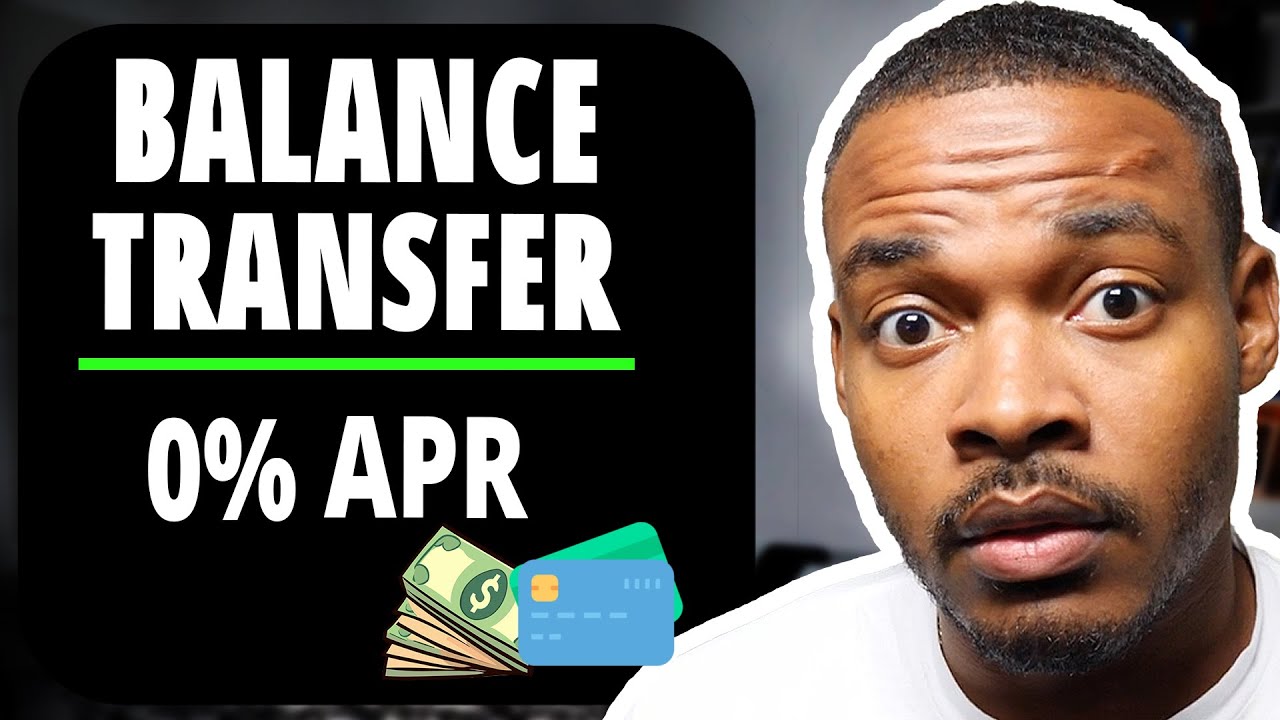
so let's say for example you have right now a $5,000 credit card okay that's the balance on this card you're paying 25% interest annually and that's about a $100 minimum payment every single month you're actually responsible for paying now all of a sudden by Magic you actually get an offer in the mail from a balance transfer credit card and you're like yo it must have been my luck it's not luck it's marketing your information has been sold thus the company knows about it and thus now they're sending you offers Direct offers to you now the offer says this we're going to give you 21 months to transfer your debt over to us and you get to pay it off in 21 months and we won't charge you any interest whatsoever for those first 21 months and you might say well this sounds like a great deal over here I'm paying for example a 100 bucks per month in interest but over here I'm going to be paying Z in interest for the first 21 months this saves me a bunch of money and the only catch is you have to pay a 3% fee for the entire balance transfer now that's not a big deal because right now you're paying $100 as a minimum payment and when you take 3% of 5,000 that's only about $150 or so so it's really not a big deal so why is this attractive what is the problem with it and what exactly is a balance transfer credit card I'm going to go into all the details in this video now do me a favor guys and ask you smash the like button I appreciate it a ton now the first thing is this guys okay a balance transfer credit card I'm not going to complicated it's basically just a credit card that is designed to actually get people that are in debt in some way to transfer their debt over to this credit card and potentially that company be the one that's actually going to get all that interest from you going further it's kind of like a long-term investment okay they're actually betting that you're not going to to pay it off in that introductory period and the TR going to keep the balance and you're going to continue to pay them and pay them and pay them and yes it could actually turn against them if you actually pay but for the most part they get 3% outright and if you don't pay them well you might become a customer for something else you might get another credit card with them or another product or a loan or a mortgage whatever it is okay they have a customer a prospect to get other things that is what a balance transfer is actually good for it now what is the problem here Tommy I still don't understand okay they're giving me an offer if I'm smart and I take advantage of it I walk away without paying any interest isn't that great well the answer is this okay you might think that you're actually going to walk away dilly dally free okay but what happens is usually this what's actually going on when you actually open up a Balan transfer credit card whether it's an offer whether you've been pre-approve approval whatever you just basically you basically just opened up another line of credit that is what's actually going on so let's say for example you have credit card a you owe $5,000 a year and now you actually get pre-approved for a balance for a credit card and then you basically apply and then say hey we're actually going to give you a balance of or a credit line of $7,000 and you say well that's awesome that's more than I had over here so now you say I want to transfer the balance from credit CR card a over to credit card B your new card the balance transer card and by the way it doesn't have to be a credit card it could also be for example Hospital loans it could be any debt overall even Collections and they could actually just basically pay that off by sending them a check and basically now you're in here and the debt is over here that's the whole idea okay so what happens is this okay you say I want to transfer balance from this card over to here they say okay just pay us a 3% fee you pay the 3% fee that's $150 they sent over a check to your credit card okay now that's fully paid off the balance on credit card a is basically zero the balance on your new balance crit card is basically um $5,000 or whatever the balance here basically was that's the idea now what actually happened here okay you went from having a credit line of $5,000 to having a credit line of basically $122,000 remember so if you got in value so far I'm going to ask for a favor subscribe to the channel because only like 20% of the people that watch or actually subscrib so go ahead and subscribe right now cuz I have a lot more content and having a credit line of basically $112,000 remember they actually gave you $7,000 and you have 21 months to pay that off okay without any interest and you might think this is awesome okay what I'm going to do is basically pay this off and never look back but what usually happens is this and I'm sad to say this okay but what usually happens is this okay you have credit card a now which is basically empty and you have credit card B all right and what happens is basically you say well this one is free you start using it again okay and before you know it this goes right back up to 5,000 or 3,000 or 4,000 and this one you're barely making any real payments or any Dent to it remember they gave you 5,000 the balance transfer credit card is still a credit card you can still use it to buy stuff and it still gave you $2,000 extra dollars and you actually need it so now you might use that for some things else okay and before you know it the 21 months have gone by and now you owe over $110,000 overall you owe credit card a you also go owe credit card B credit card B is saying yep we got them now we're actually collecting interest payments every single month from you and credit card a is saying well he paid it off but now he's back to pay now so I guess we win also so what is the right way to go about this and Tommy how have you ever done this the answer is I owed about wait for it $133,000 in credit card debt and I actually used balance transfer credit cards to actually help me clear all the debt now I was not one of the people that actually went ahead and basically clear credit card a transfer to credit card B and then build up a balance back in credit card a what I did was this I follow this three step system okay the first step is you want to set for yourself some really real istic goals based on how long they're actually going to give you interest free so overall let's say I actually owe $5,000 right that's how much I actually owe I'm going to divide this number by how many months you're actually going to give me so divided by 21 in this in this case by the way what credit card am I actually talking about I'm actually talking about the city Simplicity balance transfer credit card that offer 21 months to pay interest free 0% APR and even 12 12 months to actually buy things and not get charged any interest obviously they're doing this for a reason you transfer the balance over you get 21 months to pay it off but you also get 12 months to buy other crap and actually build up even a bigger balance don't be stupid don't fall for that okay so now I know that per month I need to pay about $240 to be debt free in21 months okay that's the idea and that's how I would actually do it now for me personally I would say well if if this is actually very doable I would stick to it if it's actually a little bit less than I can basically do I would actually lower it and basically even if I end with the balance okay at least I was actually realistic okay now for me personally I actually paid more towards it to be able to pay it off a lot faster I actually paid off $133,000 in credit card debt in 12 months okay because I actually fell for that trap where discover sent me a credit card and they were like Hey we're going to give you I think 18 months of purchase free interest and I went crazy okay I went crazy and what happened is I maxed out everything then it was like um I think it was 18 months right so I spent like 6 months doing some crazy stuff and then I had 12 months and I was like yo I need to pay all this in 12 months and I basically was able to cover everything in 12 months I think at a point I to transfer balance over to the balance transer card but I was actually able to do it which actually saved me a ton of money but it was only because I was smart so step number two is basically once you transfer the balance well close credit card a all right close it because you don't want to be at risk at rebuilding this actual um credit line and to actually get into double the debt you actually want to clear that and then lastly all right the balance CH credit card don't use it to get into more debt only use it to actually pay off the debt fast and be done with it and once you're done with all the debt my advice would be a 100% just close to to credit cards overall and don't get back into those problems okay ever since I became debt free and I don't have any credit cards I have no method no way of getting into debt anymore so it's not something I worry about but as long as you have that possibility that availability to watch you say I'm going to use this credit card for this or that for this emergency or that emergency you're always going to be going back into debt and going right back into where you landed I think the Bible says a dog is always going to return to his vomit and that's just disgusting okay so if debt is actually getting you into trouble over and over again and you're going back to it well that's just stupid and nonsense okay you actually want to avoid that so yes okay understand what they're trying to do they're trying to get you to bring your balance over to hopefully spend more money to be trapped with them and to pay them a bunch of interest but if you're smart what you're actually going to do is say I'm going to use you and I'm going to take advantage fully I'm going to close credit card a and once I'm done with you I'm also going to close you and I'm going to be done with it so set for yourself achievable goals so you're actually able to do this as fast as possible guys thanks for watching as always like subscribe hit the Bell sh notified there are obviously other balance of credit cards out there so if you know a few of them comment them down below if you want a full video on the offers out there let me know and I'll actually get to work up here is another video and this video is actually made possible by the supporters over at patreon here is a list of their names I appreciate it a ton if you actually want to join us on patreon support the channel the link is going to be down below thanks for watching as always like subscribe hit the Bell so you get notified peace

As found on YouTube

DO NOT Pay Debt Collectors | How to Handle Debt When It’s Gone to Collections

how should you handle debt once it has gone into collections now not to give away the ending but i'm telling you right now that paying it is quite literally the very last thing that you should do when it comes to debt collectors hi i'm laurie ann co-founder of dow jane's and if you are dealing with the stress of having a debt collector chasing you for money don't worry i am going to tell you everything that you need to know what a debt collector cannot do what your rights are and how you should handle debt collectors if you want to learn more about how to save invest and make the most of your money be sure to subscribe and hit the bell so you don't miss out on future videos [Music] now let's dive in what happens when your debt goes to collections well one of two things happens when a debt goes into collections either option one the creditor that you owe money to so say your credit card issuer or your mortgage lender when the lender thinks that you're behind on payments the creditor might use its own debt collectors to follow up and collect the debt from you or they may hire a debt collection agency or a law firm to take it on option number two is that a different company actually buys your debt from the original creditor and now they are trying to collect on the money that you owe in this case the original lender probably already received some sort of insurance money and sold your debt for pennies on the dollar now before i give you some tips for dealing with debt collectors i want to make sure you know what debt collectors can and cannot do and how to make sure that you are not being scammed and what your rights are when it comes to debt collections so the first thing i want you to know is that debt collectors are only allowed restricted contact they can only call you between the hours of 8 am and 9 pm and they're not allowed to call you at work so if you get a call outside of these hours then you might be dealing with a debt collection scam the second thing i want you to know is that you can request a callback number just like any other legitimate business a debt collection agency should be able to provide you with company information including a number to call them back when you get contacted by them write down as much information about the company as possible including its name and address this is important to see if they are legally operating in your state the third thing i want you to know is that debt collectors cannot lie or harass you or just generally be toxic people debt collectors cannot make you pay more than you owe or threaten you with a arrest jail time property liens or wage garnishment if you don't pay they do not have the power to do that so if they say otherwise hang up wage garnishment may be legal in your state but your debt collector will need to take you to court first and if a debt collector is posing as police or threatens to arrest you then there's a good chance this is a scam and you can report them to and the threat to the federal trade commission and the consumer financial protection bureau the last thing i want you to know about your rights is that you can stop a debt collector from contacting you under the fair debt collection practices act if you notify the collection agency in writing to stop communicating with you then they can only contact you again to advise you on one of two things one that they're going to stop trying to collect from you or two that they intend to take action against you such as filing a lawsuit and this law applies even if you do own the debt so you do not have to just surrender to the fact that you're going to be called repeatedly by debt collectors notify them in writing if you don't want to hear from them anymore now that you understand your rights uh and how to watch out for potential scams let's talk about how you should actually handle it when the debt collector starts ringing you up number one don't admit to the debt i know i might sound like a fat cat lawyer here but seriously just don't admit to the debt especially not on the first phone call some debts come with a statute of limitations meaning after a certain period of time collectors legally can't win a court order for repayment and so if you admit that the debt is yours you may actually reset the clock on that statute of limitations so don't confirm the debt especially on your first contact until you get more facts even if you know the debt is yours so point number two is you want to get the facts straight without admitting that the debt is yours get information on the debt itself ask who the original creditor was the original debt amount and how much is owed and the more details the debt collector can provide the better if the statute of limitations has expired the debt collector can no longer sue you to recoup the debt plus when your debt has been sold there's often misinformation about the debt itself or who owes it so you want to make sure that all of that is accurate point number three don't be emotionally manipulated a lot of people feel guilty about their debt and debt collectors prey on that emotion they create a sense of urgency that hits you right where you're sensitive we always tell people that they have to learn how to deal with the difference between money facts and money feelings so think about where your emotions and attitude towards debt and money have come from and then release yourself from any negative emotions that are holding you back if you find yourself on the phone with a diet collector don't let them make you feel bad okay and don't pay or promise payment or give any payment information at this time you're sensing a theme in this video like i said paying is literally the last thing that you're going to do you want to just ask for information on the debt and say that you'll be in touch later number four dispute any errors with the debt if you find any erroneous information with the claim dispute it mail a letter to the debt collector stating the amount that they're saying you owe is incorrect you should also ask for proof of the debt collector's claim that you owe money such as copy of a credit card bill and be sure to keep a copy of the letter yourself the consumer financial protection bureau offers a sample dispute letter on its website which i'll link to down below if you and the collector cannot settle the dispute you may want to bring in a third party arbitrator to weigh the evidence and if things get really hairy you may want to consider hiring an attorney make sure that you have records of everything you've been discussing with the collector in case it reaches this point it's always better to communicate via email or mail so you have a copy of your conversations in writing the fifth step you're going to decide if you want to pay off this debt or not this may sound a little odd we often feel like we have a moral obligation to pay our debts but the truth about how debt works is that the lender does take on a certain amount of risk when they lend out money this is part of why they charge interest it's to cover the cost of debts that have gone bad so you may have your own relationship to debt you may want to pay off this debt but it may actually not be in your best financial interest to do so when a debt goes into collections the main impact that it has on you is damage to your credit score and any debt that has already gone into collections has already done that damage and it's going to continue to have a negative impact on your credit score for about seven years until it falls off of your credit report now in some cases you may be able to negotiate the removal of this derogatory mark on your credit report as part of paying a settlement on the debt but if you have a debt that's gone into collections and it's close to being seven years old it will likely fall off your credit report soon and it may not be worth paying it's not going to improve your credit score at this point to clear it off because you've had that mark on your report for so long and if it's going to fall off and stop damaging your credit report you may be better off just waiting it out especially if you have any current debts that you're struggling with so i want you to focus first on maintaining good standing with the active debts that you have before paying off debts in collections number six negotiate the debt if you do decide to pay it at the end of the day whether it's a creditor or a collections agency reaching out to you all they want is some money and usually they paid a lot less for the debt than the amount that you actually owe on it so they might be willing to consider either lowering the debt so you can pay it all off in one lump sum or setting up a payment plan that you can reasonably manage make sure that you negotiate and always always always get any agreement that you come to in writing before you take the final step step 7 pay down the debt now at long last after you have done all of the previous steps it's finally time to pay up if you have decided to pay off this debt how you go about this will depend on what you worked out with the collector if you agreed to a lower lump sum then pony up the payment and move on with your life if you've set up a payment plan then make sure that you have that payment built into your monthly budget and that you're going to be able to meet it and if you need some help setting up a budget we have a video to help you out which i'll link to in the description below all right final thoughts i mean rarely should you just try to solve a problem by throwing money at it and when it comes to debt collections that should not be your first instinct i know this is stressful but take a deep breath and approach this problem with knowledge patience and strategy if you need some help getting out of debt be sure to check out our free training say goodbye to debt forever the principles that we teach in this class are specifically around credit card debt but really they apply to all kinds of debt all right hope to see you in that free training and good luck

As found on YouTube

$100,000 in Credit Card Debt

– $100,000 of credit card debt. Can you even imagine
having that much debt? Maybe you do have that
much credit card debt. In this video, we're going to talk about how to solve that problem of large amounts of credit card debt. But first, if this is your first time here on my YouTube channel, please
go ahead and subscribe. On a weekly basis I
provide different content on how to deal with really
serious and big problems whether it's bankruptcy, whether it's debt collection lawsuits, or whether it's dealing with large amounts of credit card debt, which is what we're going
to talk about today. Now to put this into perspective, $100,000 of credit card debt. If you're paying the
average interest rate. And nationwide, this is
according to WalletHub, they say the average interest rate in the United States right
now is 19.02% interest. Which seems kind of high, but
that's what the average is across the board on new credit cards, 19%. If you have $100,000 of credit card debt, you're monthly minimum payment
is going to be $4,000 a month. So you can see how this
could really quickly get out of control.

Now you may be asking yourself, how does anyone get $100,000
of credit card debt? Let me tell you in my
law practice what I see, how this typically happens. The first one is business debt. Business credit cards are
a little easier to get, at least in high amounts. They may be lines of
credit, or lines of credit that have rolled over into a
credit card type situation. Where we see that they'll get multiple. You know, it's usually not just one card, but there'll be four or five cards with 15, $20,000 of credit on it. And those get racked up, the
business doesn't do well, the business fails. You know, worldwide pandemic happens. And all of a sudden you can't pay your monthly credit card payments. All of a sudden that
becomes a big problem. The second area I see is medical debt. A lot of people put their
medical expenses on credit cards.

Either because they have high deductibles, which most insurance policies nowadays do have very high deductibles. Or they don't have insurance at all so they put those medical
services on a credit card, and then they're unable to pay them. The third area that I see this is where people are consistently supplementing their monthly
income with credit cards. So if someone, their
salary is $4,000 a month. They're consistently
putting $500 to $1,000 on the credit card. And over time it starts to build up and with interest the whole
thing just starts to snowball. So it may sound like,
hey $100,000 in debt, that's really got to be the exception. It's more common than you think, particularly in my line of
business, I do bankruptcy law. I see people routinely
that have 50,000 plus and a number of those
people get over 100,000. Sometimes up to $150,000
of credit card debt. So the question is, what
do you do if you have large amounts of credit card debt, how do you solve that problem? Really you have three options. Your first option is
to simply pay it back. This is done through usually something like the Dave Ramsey snowball method.

Something that a lot of people don't know is I'm actually a certified
master financial coach through the Dave Ramsey Organization. Which I know is kind of weird because I'm also a bankruptcy attorney. But I believe in that type of method. If it's something where you have the means to be able to pay back
your debts over time, using Dave Ramsey's snowball method of starting with the lowest balance and start paying that off, and then taking the monthly
minimum that you paid on each card that you pay off and
applying it to the next one as you go over time. That's a great method
for getting rid of debt. It requires an incredible
amount of discipline and it requires a regular, monthly income that can actually pay that debt off. That's where I see a
lot of people struggle, is they simply don't
have the monthly income.

Particularly right now as we're dealing with this coronavirus,
COVID-19 thing going on. A lot of people's income has
reduced, their hours are down. And so that makes that type
of approach pretty difficult. The second one is to settle the debts. Now debt settlement is generally a decent approach to
deal with these things. A lot of the big problems I see is if you have a lot of cards. If you have 50,000 or
100,000 in credit card debt and it's spread out over
10, 15 credit cards, it's going to be pretty difficult. Because you have to get
all of them on board in order for the settlement
to make much sense. If you don't get them all on board and you settle half of them
and the other half sue you, you're not in a much better situation. So if you have a low
number of credit cards, you know, two to four, maybe five cards and you have the ability to make offers.

Usually settlement is only effective if you have a lump sum to deal with. So if you have some cash
and you can pay anywhere from 20 to 50% of the total
amount that they're seeking, they may be willing to settle with you. It's important to note that settlement, at least good settlements,
usually only happen once the account goes
completely delinquent, either it's charged off or
even sold to a junk debt buyer, that's where you're going to
get the better settlements.

If you're current on
your payments right now and you call up your credit
card company and say, "Hey I'd like to pay half." They're going to tell
you pounce and you can pay the full amount, or they may give you
some kind of you know, forbearance, something like
that for a month or two. But they're not going to
give you the good deal until it goes negative or
til it goes delinquent. The problem with that obviously is it's going to impact your credit. So let's talk about the
third option, bankruptcy.

The B word. You know, most people don't
want to file for bankruptcy, but it's a very powerful tool for getting rid of credit card debt. If you find yourself in this situation. In the typical Chapter 7 bankruptcy, pretty much all credit
card debt is discharged. It's eliminated. It goes away completely,
there's not payback, there's no tax consequences to it. It just goes away and is discharged. So if you're dealing with large
amounts of credit card debt a Chapter 7's not a bad option of just getting it out completely. It's a relatively quick process, it takes about four to five months. The alternative is a Chapter 13. Chapter 13 is typically
when people don't qualify for a Chapter 7 because
their income is too high. I can't go into the specifics of income here in this video because those
numbers change all the time and it varies from state to state. But I can tell you this, they base it upon your
household size and your income. And depending on where you're at there, a bankruptcy lawyer
will help you determine if you're able to move
forward with a Chapter 7.

If not, you're looking at a Chapter 13 or you'll be required to pay
back a portion of that debt over a 60-month period. At the end of the 60 months if there's any balances still remaining, that would be discharged
or eliminated completely at that point. So those are really your three options. You can pay it, you can settle it, or you can file bankruptcy on it. The best thing obviously
is to try to avoid getting into that kind of debt. But that's not what I do on this website is help you avoid it,
I help you get out of the problems that you're already in. So I appreciate you watching today. If you want to learn
more about how to deal with large debts or some
of those different options, debt settlement, bankruptcy, or even that Dave Ramsey snowball. I have more videos on this site. Make sure you subscribe
and check those out. I know they can help you out. Thanks for watching today..

As found on YouTube

How to Get Out of Credit Card Debt: The Basics (Debt Management 2/4)

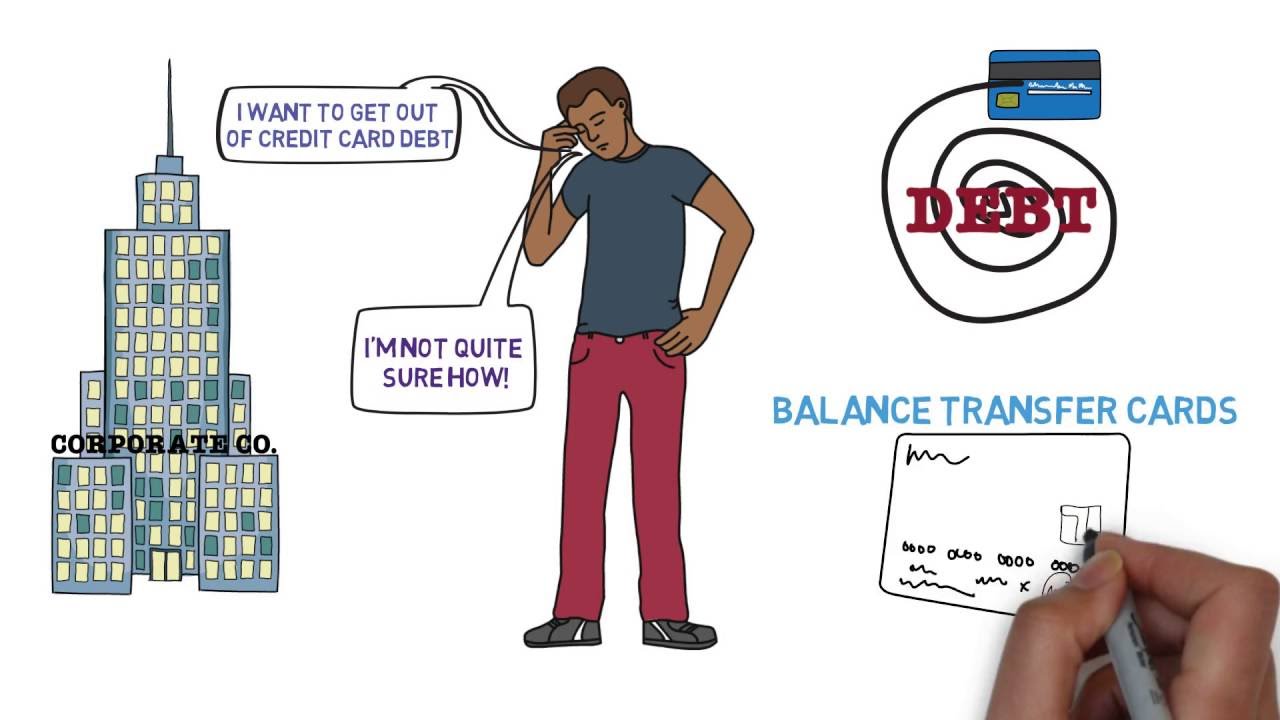
Meet Tom. Tom is a few years out college with a great
job and a lot credit card debt. Tom wants to get out of debt, but isn’t
quite sure how. Luckily for Tom, there exists a great solution
to his problem: balance transfer cards. However, before we continue, if Tom doesn’t
have a firm understanding of what a credit card or credit score is, or how to effectively
use either, we highly recommend watching our three videos “Credit Cards 101,” “Credit
Scores and Reports 101,” and “Credit Cards: Mistakes and Best Practices” before continuing
further. But let’s get back to the matter at hand. What is a balance transfer? Well, a balance transfer is simply the act
of transferring an existing credit balance to another credit card.

Most credit cards aren’t good this for:
they’ll immediately start charging interest on the transferred balance, plus a fee, generally
about 3-5% of the transferred balance. However, there is a specific subset of credit
cards, called balance transfer cards, that won’t immediately start charging interest,
instead giving Tom a 15-21 month window of 0% APR to pay off his balance interest-free. This is a great deal, but let’s still walk
through the steps you’ll need to take to get one: Step 1: Before doing anything, make a debt
repayment plan, ideally using our free recommended website, and rank your credit cards by interest
rate, as no matter what you end up doing, you’ll always want to tackle the highest
interest rate debt first.

Step 2: Once that’s done, call your credit
card company and try to get them to lower your APR. Emphasize that if they don’t agree, you’ll
move your balance to another company offering lower rates. Step 3: If the call fails and you still want
to transfer, keep in four three things. One: You’ll need good credit to get a balance
card. Two: You can’t transfer a balance to a card
offered by your current bank. Three: Depending of the size of your debt,
you may not be able to pay it off by the end of the promotional period, so have a plan
for that. And Four: The credit line on your balance
transfer card may be below your total debt load, meaning you’ll either have to:
Apply for a second balance transfer card Keep the remaining debt on your current card
and pay the high rate. Or use a personal loan, which is slightly
more expensive than a balance transfer card, but comes with a lower credit score requirement. And don’t worry, we’ll cover this option
in our next video. However let’s assume for now that Tom has
been approved for a balance transfer card with a high enough credit limit.

This is an important first step, but they’re
still a few more things to keep in mind: One: Don’t spend on the card, as the 0%
APR period may not extend to purchases. Two: Complete the transfer as fast as possible
or the 0% APR offer may expire. Three: Be careful about consolidate multiple
balances onto one card, as that will lower your credit score.

Four and Finally: Once you’ve completed
the transfer, always pay on time and don’t close out your old accounts, as failing to
follow either will lower your credit score. Hopefully you and Tom now better understand
balance transfer cards. Be sure to check out our next video, where
we’ll teach you how to get out of credit card debt without them, and be sure to website,
where you can find more educational content, your free credit score, and great credit card
recommendations..

As found on YouTube

Should You Consolidate Your Debt?

– Multiple credit cards, high balances, high interest rates, high stress levels. You've been making payments
over a long period of time, but it doesn't seem to have
put a dent in your debt. Perhaps, you're even
considering the dreaded B word. But, before you go that far, you may be considering something
called debt consolidation. – What is debt consolidation? It's simply taking two or more accounts and
combining them into one. And, that's where you'd
make your payments. – Well, that sounds good. Simplifying makes things easier right? Not always – Consolidating your debt
may mean less paperwork, but that doesn't mean it's
the best path out the woods. – There are several different
ways to combine your balances and you should understand
the good and bad of each before you decide what's right for you. (lively music) – One way to consolidate debt is to simply transfer the
balance from one credit card to another.

Credit card companies are
often happy to do this since it means you'll
get in deeper with them. Many will offer a variety of promotions, 0% APR over the course of
anywhere between 12 to 18 months. Some will offer an
extended promotion date, but at a slightly higher interest rate. Transfer fees are common. So, be sure to factor that in. – This sounds like a pretty simple way to get some immediate relief, but beware of the fine print. Most of these deals
involve deferred interest which means that you're
still accruing interest on your balance during the
whole promotional period. When the promotion expires, you are charged all of
that accumulated interest despite the number of
payments you've made. Yikes. – Another way to consolidate debt is through a personal loan. You get a loan from a bank, use it to pay off all your credit cards, and then make payments to the bank.

Sounds simple. Again, there are some hitches. – First of all, your credit has to be in a favorable condition
to actually get approved. If you've been struggling to make payments on multiple cards, which you probably are if you're considering consolidation, then it'll be pretty hard to get a loan. And, even if you do, the
terms probably won't be great. This route only makes sense if you can get a lower APR on the loan than you have on the cards. – Also, this method can
be very risky for someone who has trouble restraining
their urge to spend. Suddenly having several
wide open credit cards may be too much temptation.

There are many cases where consumers have taken out a loan to pay
off all their credit card debt just to turn around and run
the cards right back up. – The third option is to
seek the help of a company that specializes in debt settlement. It may sound attractive
to let someone else handle all the messy details, but you should definitely
know how it works. – First, they ask you to
stop paying all your debts and instead start making payments into a special savings account.

Once there's enough there,
they take that money and negotiate a payoff with
each of your creditors, typically much lower than
the full amount you owe them. So, what are the downsides? – First, their fee, which can be as high as 25% of your total debt. Second, since you're effectively
defaulting on your loans, your credit score will get hammered. And, third, they may
not even be successful. If they can't reach an agreement with one or more of your creditors, you'll still be on the
hook for the full amount with all the fees and
damage to your credit. – Maybe, none of these sound
like great options to you.

Well, there's good news. Many people actually have greater success by not consolidating their debt. It may sound nice to
simplify your payments, but the psychological effect
of having one giant loan can be very intimidating. At a time when you need
discipline and optimism, you feel discouraged and hopeless. – By keeping debts separate and focusing on one at a time, you can get a feeling of
accomplishment and pride with each closed account, which can go a long way
to keeping you motivated.

It's all about knowing what
works best for your personality. – If you decide to keep
your debts separate, you can negotiate directly
with your creditors for some leniency, often called hardship programs. These policies were
developed to assist consumers that are struggling with
making on time payments. If qualified, the creditors
will lower your monthly payment and interest rate, no defaulted accounts, no wasted money paying a company to do what you can do yourself.

But, there are some hurdles. – You may have to prove that you are actually facing a hardship. Shop-aholism doesn't count. Think family emergencies,
job losses, pay cuts, or medical illness, and you may need
documentation to prove it. Once in the program, the lender will either close
or freeze your account. They may also lower your credit limit. If this results in a high
utilization percentage, the proportion between what you owe and the total you can borrow, you are likely to see a
decrease in your scores. – In the end, there's no one right way to handle debt. The important thing is that you know what you're getting into and that you know yourself – Your personal strengths and weaknesses will determine how well
each option would work.

So, you need to take an
honest look at yourself before making a decision. – [All] And, that's our two cents. – [Female Narrator] Thanks to our patrons for keeping Two Cents financially healthy. Click the link in the description to become a Two Cents patron. – If you want more strategies
for dealing with debt check out our video, What's the Fastest Way to Pay Off Debt? (lively music).

As found on YouTube

The Problem With 0% Interest Debt On Balance Transfer Cards

so let's say for example you have right now a $5,000 credit card okay that's the balance on this card you're paying 25% interest annually and that's about a $100 minimum payment every single month you're actually responsible for paying now all of a sudden by Magic you actually get an offer in the mail from a balance transfer credit card and you're like yo it must have been my luck it's not luck it's marketing your information has been sold thus the company knows about it and thus now they're sending you offers Direct offers to you now the offer says this we're going to give you 21 months to transfer your debt over to us and you get to pay it off in 21 months and we won't charge you any interest whatsoever for those first 21 months and you might say well this sounds like a great deal over here I'm paying for example a 100 bucks per month in interest but over here I'm going to be paying Z in interest for the first 21 months this saves me a bunch of money and the only catch is you have to pay a 3% fee for the entire balance transfer now that's not a big deal because right now you're paying $100 as a minimum payment and when you take 3% of 5,000 that's only about $150 or so so it's really not a big deal so why is this attractive what is the problem with it and what exactly is a balance transfer credit card I'm going to go into all the details in this video now do me a favor guys and ask you smash the like button I appreciate it a ton now the first thing is this guys okay a balance transfer credit card I'm not going to complicated it's basically just a credit card that is designed to actually get people that are in debt in some way to transfer their debt over to this credit card and potentially that company be the one that's actually going to get all that interest from you going further it's kind of like a long-term investment okay they're actually betting that you're not going to to pay it off in that introductory period and the TR going to keep the balance and you're going to continue to pay them and pay them and pay them and yes it could actually turn against them if you actually pay but for the most part they get 3% outright and if you don't pay them well you might become a customer for something else you might get another credit card with them or another product or a loan or a mortgage whatever it is okay they have a customer a prospect to get other things that is what a balance transfer is actually good for it now what is the problem here Tommy I still don't understand okay they're giving me an offer if I'm smart and I take advantage of it I walk away without paying any interest isn't that great well the answer is this okay you might think that you're actually going to walk away dilly dally free okay but what happens is usually this what's actually going on when you actually open up a Balan transfer credit card whether it's an offer whether you've been pre-approve approval whatever you just basically you basically just opened up another line of credit that is what's actually going on so let's say for example you have credit card a you owe $5,000 a year and now you actually get pre-approved for a balance for a credit card and then you basically apply and then say hey we're actually going to give you a balance of or a credit line of $7,000 and you say well that's awesome that's more than I had over here so now you say I want to transfer the balance from credit CR card a over to credit card B your new card the balance transer card and by the way it doesn't have to be a credit card it could also be for example Hospital loans it could be any debt overall even Collections and they could actually just basically pay that off by sending them a check and basically now you're in here and the debt is over here that's the whole idea okay so what happens is this okay you say I want to transfer balance from this card over to here they say okay just pay us a 3% fee you pay the 3% fee that's $150 they sent over a check to your credit card okay now that's fully paid off the balance on credit card a is basically zero the balance on your new balance crit card is basically um $5,000 or whatever the balance here basically was that's the idea now what actually happened here okay you went from having a credit line of $5,000 to having a credit line of basically $122,000 remember so if you got in value so far I'm going to ask for a favor subscribe to the channel because only like 20% of the people that watch or actually subscrib so go ahead and subscribe right now cuz I have a lot more content and having a credit line of basically $112,000 remember they actually gave you $7,000 and you have 21 months to pay that off okay without any interest and you might think this is awesome okay what I'm going to do is basically pay this off and never look back but what usually happens is this and I'm sad to say this okay but what usually happens is this okay you have credit card a now which is basically empty and you have credit card B all right and what happens is basically you say well this one is free you start using it again okay and before you know it this goes right back up to 5,000 or 3,000 or 4,000 and this one you're barely making any real payments or any Dent to it remember they gave you 5,000 the balance transfer credit card is still a credit card you can still use it to buy stuff and it still gave you $2,000 extra dollars and you actually need it so now you might use that for some things else okay and before you know it the 21 months have gone by and now you owe over $110,000 overall you owe credit card a you also go owe credit card B credit card B is saying yep we got them now we're actually collecting interest payments every single month from you and credit card a is saying well he paid it off but now he's back to pay now so I guess we win also so what is the right way to go about this and Tommy how have you ever done this the answer is I owed about wait for it $133,000 in credit card debt and I actually used balance transfer credit cards to actually help me clear all the debt now I was not one of the people that actually went ahead and basically clear credit card a transfer to credit card B and then build up a balance back in credit card a what I did was this I follow this three step system okay the first step is you want to set for yourself some really real istic goals based on how long they're actually going to give you interest free so overall let's say I actually owe $5,000 right that's how much I actually owe I'm going to divide this number by how many months you're actually going to give me so divided by 21 in this in this case by the way what credit card am I actually talking about I'm actually talking about the city Simplicity balance transfer credit card that offer 21 months to pay interest free 0% APR and even 12 12 months to actually buy things and not get charged any interest obviously they're doing this for a reason you transfer the balance over you get 21 months to pay it off but you also get 12 months to buy other crap and actually build up even a bigger balance don't be stupid don't fall for that okay so now I know that per month I need to pay about $240 to be debt free in21 months okay that's the idea and that's how I would actually do it now for me personally I would say well if if this is actually very doable I would stick to it if it's actually a little bit less than I can basically do I would actually lower it and basically even if I end with the balance okay at least I was actually realistic okay now for me personally I actually paid more towards it to be able to pay it off a lot faster I actually paid off $133,000 in credit card debt in 12 months okay because I actually fell for that trap where discover sent me a credit card and they were like Hey we're going to give you I think 18 months of purchase free interest and I went crazy okay I went crazy and what happened is I maxed out everything then it was like um I think it was 18 months right so I spent like 6 months doing some crazy stuff and then I had 12 months and I was like yo I need to pay all this in 12 months and I basically was able to cover everything in 12 months I think at a point I to transfer balance over to the balance transer card but I was actually able to do it which actually saved me a ton of money but it was only because I was smart so step number two is basically once you transfer the balance well close credit card a all right close it because you don't want to be at risk at rebuilding this actual um credit line and to actually get into double the debt you actually want to clear that and then lastly all right the balance CH credit card don't use it to get into more debt only use it to actually pay off the debt fast and be done with it and once you're done with all the debt my advice would be a 100% just close to to credit cards overall and don't get back into those problems okay ever since I became debt free and I don't have any credit cards I have no method no way of getting into debt anymore so it's not something I worry about but as long as you have that possibility that availability to watch you say I'm going to use this credit card for this or that for this emergency or that emergency you're always going to be going back into debt and going right back into where you landed I think the Bible says a dog is always going to return to his vomit and that's just disgusting okay so if debt is actually getting you into trouble over and over again and you're going back to it well that's just stupid and nonsense okay you actually want to avoid that so yes okay understand what they're trying to do they're trying to get you to bring your balance over to hopefully spend more money to be trapped with them and to pay them a bunch of interest but if you're smart what you're actually going to do is say I'm going to use you and I'm going to take advantage fully I'm going to close credit card a and once I'm done with you I'm also going to close you and I'm going to be done with it so set for yourself achievable goals so you're actually able to do this as fast as possible guys thanks for watching as always like subscribe hit the Bell sh notified there are obviously other balance of credit cards out there so if you know a few of them comment them down below if you want a full video on the offers out there let me know and I'll actually get to work up here is another video and this video is actually made possible by the supporters over at patreon here is a list of their names I appreciate it a ton if you actually want to join us on patreon support the channel the link is going to be down below thanks for watching as always like subscribe hit the Bell so you get notified peace

As found on YouTube