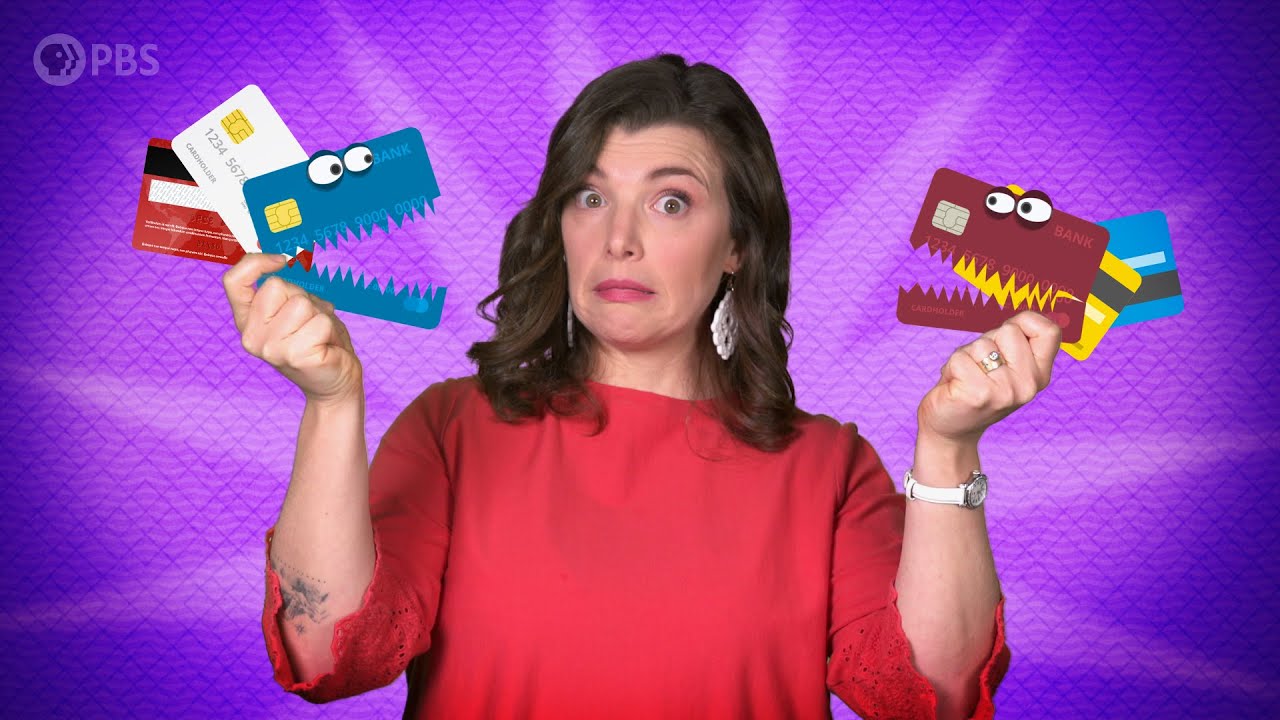
– Multiple credit cards, high balances, high interest rates, high stress levels. You've been making payments
over a long period of time, but it doesn't seem to have
put a dent in your debt. Perhaps, you're even
considering the dreaded B word. But, before you go that far, you may be considering something
called debt consolidation. – What is debt consolidation? It's simply taking two or more accounts and
combining them into one. And, that's where you'd
make your payments. – Well, that sounds good. Simplifying makes things easier right? Not always – Consolidating your debt
may mean less paperwork, but that doesn't mean it's
the best path out the woods. – There are several different
ways to combine your balances and you should understand
the good and bad of each before you decide what's right for you. (lively music) – One way to consolidate debt is to simply transfer the
balance from one credit card to another.
Credit card companies are
often happy to do this since it means you'll
get in deeper with them. Many will offer a variety of promotions, 0% APR over the course of
anywhere between 12 to 18 months. Some will offer an
extended promotion date, but at a slightly higher interest rate. Transfer fees are common. So, be sure to factor that in. – This sounds like a pretty simple way to get some immediate relief, but beware of the fine print. Most of these deals
involve deferred interest which means that you're
still accruing interest on your balance during the
whole promotional period. When the promotion expires, you are charged all of
that accumulated interest despite the number of
payments you've made. Yikes. – Another way to consolidate debt is through a personal loan. You get a loan from a bank, use it to pay off all your credit cards, and then make payments to the bank.
Sounds simple. Again, there are some hitches. – First of all, your credit has to be in a favorable condition
to actually get approved. If you've been struggling to make payments on multiple cards, which you probably are if you're considering consolidation, then it'll be pretty hard to get a loan. And, even if you do, the
terms probably won't be great. This route only makes sense if you can get a lower APR on the loan than you have on the cards. – Also, this method can
be very risky for someone who has trouble restraining
their urge to spend. Suddenly having several
wide open credit cards may be too much temptation.
There are many cases where consumers have taken out a loan to pay
off all their credit card debt just to turn around and run
the cards right back up. – The third option is to
seek the help of a company that specializes in debt settlement. It may sound attractive
to let someone else handle all the messy details, but you should definitely
know how it works. – First, they ask you to
stop paying all your debts and instead start making payments into a special savings account.
Once there's enough there,
they take that money and negotiate a payoff with
each of your creditors, typically much lower than
the full amount you owe them. So, what are the downsides? – First, their fee, which can be as high as 25% of your total debt. Second, since you're effectively
defaulting on your loans, your credit score will get hammered. And, third, they may
not even be successful. If they can't reach an agreement with one or more of your creditors, you'll still be on the
hook for the full amount with all the fees and
damage to your credit. – Maybe, none of these sound
like great options to you.
Well, there's good news. Many people actually have greater success by not consolidating their debt. It may sound nice to
simplify your payments, but the psychological effect
of having one giant loan can be very intimidating. At a time when you need
discipline and optimism, you feel discouraged and hopeless. – By keeping debts separate and focusing on one at a time, you can get a feeling of
accomplishment and pride with each closed account, which can go a long way
to keeping you motivated.
It's all about knowing what
works best for your personality. – If you decide to keep
your debts separate, you can negotiate directly
with your creditors for some leniency, often called hardship programs. These policies were
developed to assist consumers that are struggling with
making on time payments. If qualified, the creditors
will lower your monthly payment and interest rate, no defaulted accounts, no wasted money paying a company to do what you can do yourself.
But, there are some hurdles. – You may have to prove that you are actually facing a hardship. Shop-aholism doesn't count. Think family emergencies,
job losses, pay cuts, or medical illness, and you may need
documentation to prove it. Once in the program, the lender will either close
or freeze your account. They may also lower your credit limit. If this results in a high
utilization percentage, the proportion between what you owe and the total you can borrow, you are likely to see a
decrease in your scores. – In the end, there's no one right way to handle debt. The important thing is that you know what you're getting into and that you know yourself – Your personal strengths and weaknesses will determine how well
each option would work.
So, you need to take an
honest look at yourself before making a decision. – [All] And, that's our two cents. – [Female Narrator] Thanks to our patrons for keeping Two Cents financially healthy. Click the link in the description to become a Two Cents patron. – If you want more strategies
for dealing with debt check out our video, What's the Fastest Way to Pay Off Debt? (lively music).
– Hello my dudes, my name is Tiffany, and today's video is about
how I paid off $10,000 in credit card debt in six months. I am so excited, and this really hasn't even hit me yet. You know how mobile banking is. Money doesn't even seem real. It's all numbers on a screen. So in this video I'm going to
explain how I got into $10,000 of credit card debt as well
as how I got out of it. Let's jump right in. First of all, this has been the best
year for me financially, and this is my first year
being a full time YouTuber, where this is the only
job that I am working. It's been that way since January so it's still relatively new, and I have been earning small
amounts of money from YouTube since about 2012, but this is not a YouTube
get rich quick scheme. It has taken a lot of time, and work to get to the point
where this is my full time job, and of course I want to mention how grateful I am for this job, because it has given me the
flexibility to work while I am still a full time college student.
And of course it's not only allowing me to earn enough to pay my bills, but also to be able to throw large amounts of money at my debts. If I were working a minimum wage job like I have in past years, I would not have been able
to do this in this timeframe. Of course, I still would
have been making payments, but it wouldn't have been possible to pay this much, this fast. So first of all, thank you to everyone watching my channel, and supporting my videos.
Keep doing it, please. No, but really I don't want
anyone to directly compare their situation to mine. I think when it comes to personal finance, it's important to remember that it's all about concepts, and strategies. Everyone's income, and expenses, and situations are very different. Those amounts will vary wildly, but when it comes to debt pay off. The strategies are all
pretty much the same. If you are trying to get out of debt, I hope that this video is somehow helpful, or maybe a little inspiring for you, and if you're not in
debt, congratulations. Maybe this video will help
you learn from my mistakes.
Anyway, let me give some
backstory into my situation. How did I get into $10,000
of credit card debt? So I made this video back in March to publicly announce my
debt pay off journey, and specify exactly how much money I owe. In addition to my credit card debt, I also owe now about
$18,000 in student loans. By the way, I chose to tackle
credit card debt first, because the interest rates are higher. My credit card interest
rates averaged about 20% while my student loan
interest rates are about 4%. so I'm 24 now, and I have considered myself
to be financially independent pretty much from age 19 when
I moved out of the house, and went to college. But even before that, since I was 16 I've been working, I bought my own first car, paid for insurance, gas,
everything, paid my phone bill, Ms. 16 year old independent. Once I got to college though, my biggest problem was that I just was not making enough money to keep up with my expenses, and that is when I started
to rely on credit cards to kind of bridge that gap, and obviously we know those balances can grow really quickly.
I used to work regular minimum wage jobs, you know, in food service, childcare, work study jobs on campus. I made about $15,000 in 2016, and then in 2017 I studied
abroad, and couldn't work, and then that summer I
worked at a summer camp, which did not pay much. It's more of an experience, and in 2017 I only earned $5,000. I honestly don't even know how I survived. So while studying abroad, my room, and board was covered by student loans, and I got a small stipend, but I did end up adding about
$1,400 to my credit card by the end of my semester,
and time traveling. Shortly after that summer, I also had to spend $2,000
on emergency dental work, yay to being uninsured. No, that was not fun, and I also decided to drop
$2,000 on SmileDirectClub to straighten my teeth.
I definitely did not have the
money for that at the time, but I was just sick of being
insecure about my teeth, and honestly now very worth it to me. I'm glad I did it then, but then of course studying
abroad was amazing, but it also costs a lot of money, and it definitely added
to my student loan debt, and my credit card debt, but again, I think it was worth it. I mean, I would not regret
that experience ever. So yes, looking back about $5,500 of my $10,000 credit card debt happened in just 2017, I had always been conscious of my debt, and I always made my payments
on time every single month, but by like early 2018 I was 22, and I just still wasn't
earning very much money. Actually before this year, I had never earned more than
$22,000 in a year before taxes, and my credit card payments were annoying, of course, but I was kind
of used to just paying them, and I had no idea how much
money I was actually wasting.
I did the math just
recently, and in 2018 alone, I paid $1,587 in interest
across four cards. Want to know how much I earned that year? Just about $20,000 before taxes. So the amount of interest that
racked up on my credit cards was over 12% of my entire annual income. That is insane. Clearly I needed to pay this off, and I knew that I was not gonna
live with this debt forever. So now I'm gonna tell you a
few basic steps for paying off credit card debt, and what my actual process was like. Step one, you've got to
get serious, and commit. This is honestly the hardest part. A lot of us can live with debt. Why is my shirt doing this? That's really annoying. A lot of us can live with debt, and kind of push it to the back
of our minds, and ignore it, but it is so important to finally realize that
you are done with this, and you are gonna start
seriously working to pay it off.
The reality is debt pay off
does not happen passively. You know, making minimum
payments for years is going to cost you so
much more in interest. The best way to pay off
debt is to pay it off as aggressively as you can. So I think it's important
to let your friends, and family know that
you're on this journey, and maybe they can help
hold you accountable.
Maybe you just want them to understand why you'll probably be saying no to spending money in certain ways. It helps to have people around
you supporting your process. For me, I just announced it publicly, which you definitely don't have
to do if you don't want to, but you know, I'm a YouTuber, and I like to share my life
with the world, and overshare, and that's what this
video is doing as well. Next, I would definitely
recommend balance transfers. Use those to take advantage of lower, or 0% interest rates for a
certain number of months, sometimes up to like 18 months. Using balance transfers
wisely will obviously save you a lot in interest. Plus it kind of gives
you like a target date to encourage you to pay
that off before the lower, or zero interest rate ends.
By the way, I don't have time to explain everything in detail, so if there's anything in this video that you are confused about, or want to learn more about, I will be linking some educational resources in the description. So yes, I did do a few balance transfers, so I did benefit from
lower interest rates, and sometimes zero interest
for a limited time, but it's crazy that I've still racked up that amount of interest,
even with balance transfers, I don't want to do the math on
how much it would've cost me if I didn't, but it would not be pretty.
Second major tip, you
must track your income, and expenses religiously. So I actually made
another video about this. I was talking about what it's
like being self employed, and paying taxes yourself, and what my kind of budgeting,
and tracking routine is. So if you're interested, check it out, but the thing is I actually
enjoy this process now. Like I used to be one of
those people who was scared to even look at my bank account, and now I check it like weekly at least. I always know what I have spent, and I know what I'm gonna
spend in the next month, and that makes me feel more secure, and I don't feel like I'm drowning. Third tip, of course you have
to pay more than the minimums.
They're kind of two main strategies when it comes to paying down debt. There's the debt snowball,
and the debt avalanche. The debt snowball, basically you would list all of your debts from smallest to largest. You would pay the minimum
on everything of course, but then any extra payments would go to the smallest amounts, and then once you pay that off, you would move on to the
next smallest amount. It's like a snow ball. This one is satisfying, because you at least get to start off, and get the ball rolling,
knocking things out, even if they are your smallest accounts, and then the debt avalanche
would be focusing on the highest interest rates first, knock out whichever account
has the highest interest rate, and then move on to the
next highest interest rate. So I actually think I did
kind of a combination of both. Obviously, generally I chose
just credit cards first, because of the higher interest rates rather than my student loans, and then I did pay off
some smaller accounts, like if I had an account with just a few hundred
dollars in the balance, I pay that off, but then I basically ended
up with two credit cards that each had about $4,000
to $5,000 on their balances, but anyway, the most important
thing in paying off debt is that you need to
somehow find extra money to be able to throw out those payments, whether it's an extra $50, $100, $500, whatever you can spare, you need to put it
towards your debt first.
Basically, if I ever had a certain amount in my checking account,
say over like $2,000, I would take everything over that amount, and put it toward debt. So where do you find that extra money? Well, there are two basic strategies. Either you can cut your spending, or you can make more money, and of course you could do both. For me, I've definitely gone
down the make more money route. I explained that in the past, I simply was not making enough
money to cover my expenses, let alone have extra
money to pay towards debt. So I knew that one way or another, I would need to make more money. I'm still of course very
mindful of my spending, but I do not have like a strict budget. I still travel, because I have to fly across
the country to see my family, and that's kind of non-negotiable for me, and I do like to treat myself
in other kind of smaller ways, but there are some financial
gurus who will tell you that you need to cut out
everything in your life that is not a necessity.
Like Dave Ramsey will tell
you to eat beans and rice, rice and beans. Other gurus will tell you
that your $5 daily coffee is ruining your finances. The thing is for some people being extra, strictly frugal can work, but for me, I knew that if I cut out
everything that brought me joy, and tried to live on
a super strict budget, I would just end up miserable, and I would hate the process, and if anything that
might cause me to fail, I definitely could have
cut down on certain things, but I probably would have
only paid off my credit cards like a month early, and to me that just
wouldn't have been worth making the whole process less enjoyable.
I mean, let's face it, paying off debt is not fun. You've got to get through it somehow, and you've got to make it
something that you can sustain in the long run. Like I like my Regal unlimited movie pass. I like gonna Starbucks a
couple of times a week, but at the same time I don't like go out. So I save a lot of money that I otherwise would spend on entertainment, or drinks. This is why it's important
to look at your spending, and look at your budget, and figure out what works for you.
What are your priorities, what are the things that you're
willing to spend money on that make you happy, and what things are you
willing to cut back on? But anyway, yes, in my
situation, increasing my income was a hugely essential element. Make more money. It's that easy, isn't it? No, YouTube is definitely unpredictable, and I'll admit that a lot of
my increased income this year has come from just being lucky, and a couple of videos
doing really well randomly. So if you want to support me, you can like, and comment on this video so that the algorithm will bless me. And if you're enjoying this video, I mean you could subscribe. Seriously though. Having YouTube be like my only source of income is interesting, because it does fluctuate wildly. Some months my only paycheck is my big Google AdSense payment, and then other months I'll get AdSense plus maybe
sponsorship paychecks.
So based on my earnings in the first few months of this year, I had estimated that I was gonna make maybe $40,000 this year, which is about $3,000
a month before taxes. And remember I have to pay taxes
plus self employment taxes. So my taxes are higher
than if you had a job that takes your taxes out for you, but I have had some better
than average months, which have raised my income,
and now I'm estimating that I'm gonna make
over $60,000 this year, which averages to about $5,000
a month again before taxes. Overall, it's very cool. I mean, again, I've never made more than like $20,000 a year. So I'm like, wow, making that coin, throwing it to the banks. I love it. I should never dance again. Here's the big question a lot of you guys asked on Instagram. Of course, this depended on how much money I made each month, because it fluctuated. Some people can do what's
called a zero sum budget where literally every
dollar in your paycheck is accounted for, but because I don't get regular paychecks of the same amount, I can't
really do a zero sum budget.
I have to look at not
only this month's income, but next month's income, and try to make sure that I will have enough
money to pay my bills. So I've brought up some examples for you. If I were to make it $3,000 pretax, that would be about $2,250 after taxes. My regular expenses like rent, other discretionary spending bills come out to about $1,800 a month, and my minimum payments
of debts earlier this year when they were at their largest, we're about $285 for student loans, and then $300 for credit
card minimum payments. So that's about $600 in debt payments, but if you do the math on
that $2,550, minus $1,800, minus $600, that wouldn't be enough. So in months like that, what I would have to do is underpay, or under save for my quarterly taxes, and then hope that I'd be
able to make it up in a month where I made more money. So if I were to make $5,000, I would pay approximately
25% toward taxes. I don't know my exact tax rate, but I use QuickBooks, and it just tells me how much
I need to pay each quarter.
So then after taxes I would have $3,750, and then after my bills, and discretionary spending, I would have about $1,800 left, which is about half of
my after tax income. So then I would pay again those minimum debt payments about $600, and then I would still
have about $1,200 extra to put toward a credit card that month. I hope this is making sense. So I've reviewed all of my
tracking, and everything, and I've tried to figure out
kind of what my trajectory of debt payments was like. Basically, most of my
debt payment progress has happened since June, and I've been able to make
a few big chunk payments to slowly knock down my
balances month by month.
These were my total credit
card balances by the end of each of these months, June was still at $10,000
so even from March when I made that first video to June, I didn't really make any progress. Then July I was at
$4,100 so I made a huge, huge, huge chunk that month, somehow. August $3,100, September $2,965,
and finally October, zero. That's still very surreal for me to say. Like I'll see it when I believe it, or I'll believe it when I see it, and I have seen it, and I guess I still don't believe it. I'm not making sense. So anyway, that pattern of debt payment probably looks quite erratic, but what happened was I was
so excited about paying more toward my debts that I was
kind of neglecting my taxes, my quarterly estimated taxes.
So I was paying too much toward my debt, and not saving enough for my taxes, and I realized that about
halfway through the year I was like, okay, I've got to pause the extreme payments, focus on catching up on my
taxes, and then continue. So that's what I did. It's so hard to pay
your own taxes yourself. Like when it's taken out of your paycheck, you're like, okay, fine,
but to do it yourself, to get that money in your
bank account, look at it, and go bye to 25% to 30% of you.
Kind of breaks your heart every time, but you got to do it. You don't want to be screwed
when it comes to tax time. We are responsible tax payers here, and by the way, from now on I am actually going to put aside, or just send a payment every single month rather than waiting until
the actual quarterly due date just because it'll be a lot easier on me, and of course now my
credit card debt is gone.
Every time I say that I could
like tear up a little bit, because it's just, it's
been with me for so long. My debt and I have just
been so interconnected. No, really it's, I'm very proud of myself. Can I tell you guys a secret? My hype song regarding
my debt payoff journey is "Gimme" by Banks. Listen to it. It's about getting what
you want, what you deserve, and I've listened to it a
shameful amount of times fantasizing about this
moment, and here I am, $10,000 in debt lighter,
and it feels great, and I just cracked my hip. (distorted music) Oh yes, I did the math again on how much interest I have paid so far in 2019 for my credit cards, and that amount is $838
just January to September. That's insane. It is so nice to know that
I will no longer be wasting about $100 a month just
on credit card interest. So now I have more questions
that I got on my Instagram.
Oh my God, I'm gonna, this shirt. Am I sweaty? Is that sweat? Yeah, it is. I'm unraveling. I'm supposed to look put together. I have questions for my Instagram. Let's continue. How do you resist lifestyle inflation? Basically, when you
start to earn more money, it is very, very, very
tempting to spend more money. How do you resist? Especially when you've been on a budget, you're like, oh, now I have
a little bit more money. Maybe I can go shopping. Maybe I can buy that thing I've wanted. It is so tempting, and it's honestly so easy
to spend that money away, rather than putting it toward your debt. So obviously for me, something that's helpful again
is when my paychecks come in, a portion goes to taxes, a portion goes to debt, and then I only leave myself with the amount that I actually need.
So I'm kind of taking my
own money away from myself before I can spend it on anything else, but also, I will admit I have
been spending a little bit more than I used to. I have still been traveling, I've bought some more clothes, usually only about $100 a month, or less. You know, it's fall. I had to buy new things, but again, generally, my spending has not increased too much, and my income has increased substantially. Maintaining of that bigger gap
between what my expenses are, and how much money I'm making
is obviously the difference. How do you stay motivated
during your debt payoff journey? For me, I love to watch, and consume a lot of financial content, and of course tracking
my spending does help me. In terms of financial content, I watch The Financial Diet, Aja Dang for her college
debt payoff journey. Sarah Nourse makes a lot
of finance related videos about how to be responsible, how to save, great stuff. Occasionally I'll watch a
little bit of Dave Ramsey if I want some, like honestly, if I want to see people who
are in like a much worse situation than me.
That's when I watch Dave Ramsey. I also watch a lot of those
like Millennial Money, like how people spend
their money type of videos, because now I have become obsessed. I want to know how much money people make, how much money they spend
on different things. Do you have debt? What kind of debt? How are you handling your debt? I've become incredibly nosy when it comes to personal finance. I wish I had x-ray vision just
to see into people's budgets, but yeah, mostly I stay motivated just by keeping my financial goals in the forefront of my mind. Constantly thinking about them, constantly seeing how I'm doing, and of course every time that
I paid off a credit card, or another balance, it's
a satisfying feeling, and it keeps you motivated to continue. What did you find was the most
helpful way to think about the process of paying off debt? To me, I just had to remind myself that the longer I take to pay this off, the more it's going to cost me.
It is not fun to throw
thousands of dollars at debt, but I have to remember I've
already spent that money, and now that spending is
costing me this amount of money in interest every month. So I'd like to stop wasting that, and just get it over
with a rip the bandaid. Don't put this onto future you, okay? Because past you already did that, and think about how mad we are at her. No, I like her. I'm really getting lost. Big question, am I saving
wow paying off debt? No, I am not. To me it just doesn't make
sense for me to try to save while I'm paying interest.
I would rather put as much money as possible toward those debts, get rid of them, and then
focus this hard on saving. It is important though to
have an emergency fund. So I really should, you know, take some time to build up a few thousand dollars for that, but I'm not gonna be
starting my retirement fund, or any serious saving until
my student loans are gone, or at least mostly gone. We'll see. I don't know. I feel like I just want to get rid of the
student loans altogether, and then move onto the next thing. It feels like a clean break. What is next? I was just saying exact same strategy, but with my student loans, and specifically I'm gonna try to pay off my parent plus loans first, just to help my parent's credit, so that they don't have
to worry about it anymore, and then I will focus on my own loans.
So I've got updates on that too. I've actually already paid a good amount of my total student loan balance off, and I didn't even really realize it, and my current school, because I transferred, my current school's financial aid package covers the entire cost of my tuition, and fees, and everything. So I have not had to take
out additional loans, and that has been major. If I had stayed at my first university, I would have graduated last year, but I also would have graduated
with over $40,000 of debt.
So progress, I did actually specifically pay off a Perkins loan. It only had about $500
left on the balance, and it was like a separate
thing to the rest of my loans, so I just wanted it gone. So I paid that off. The total for all of my
student loans were $27,405. Back in March the total was $20,747. So now I'm at $18,606, hell yeah. It seems a little bit crazy to cheer for that amount of debt. It's still a lot, but seeing that I've already just paid off $10,000 in credit card debt, and that I've almost
already paid off $10,000 of my student loans is amazing to me. That is really exciting, and I do want to be proud of myself, and see how far I've come, and I'm just gonna keep on trucking.
How has your credit score changed? I literally just paid off
the last balance of my cards like two days ago, so I
don't think my credit score has been updated since then. But I did use the Credit
Karma simulator thing, and it says that my score
will go up to about 750-ish, and I can't actually remember
what my credit scores have been in the past. I feel like they were in the good range, so I think maybe it's gone
from like a 650 to like 750. I'm very happy with that. I'm a big geek about my credit score. I want excellent. I want to hit 800 baby. We're gonna get there someday. Did you still use credit
cards while paying them down? Yes, I did. It sounds kind of counterintuitive. I have a Starbucks card, and I have an Amazon
card, so I did use those, because they're only for
like small purchases, and the rewards are
kind of worth using it, but no, for most of this year, I pretty much paid everything
with my debit card.
And now, recently I've actually gotten a new airlines reward credit card, so I'm trying to transition
to using credit cards, the smart way where you use
them to max out rewards, and then pay them off in full every month, and don't pay interest. So yeah, some people when they
pay off their credit cards, kind of want to cut them
all up, and burn them, and never use them again. I can see how people
might need to do that, or might feel like that's
better for them, but for me, I think I can responsibly use them, and not get carried away.
I want to take full advantage of the possible rewards, you know? But I do find it intimidating to think of paying off an entire month's spending all at once. So what I like to do is I
kind of pay off my credit card balance like every week, or two. That might seem like overkill,
but to me that's easier, and then what I look
at my checking balance, it's more realistic rather than having a lot
of money in my checking, and be like, oh cool, I have money, and then looking at my
credit card balance, and being like psych, that's
all go into my credit card. So yeah, and last question, what do you recommend for younger people regarding credit cards, and student loans? So I have given a good bit of
advice to my younger brother, because he's currently
a sophomore in college, and generally I would recommend
that like 18 year olds get their first credit card.
I know some people are scared of it because they think
they're gonna max it out, or I don't know, you might, but I think that for the sake
of your average credit age, it's best to get a credit
card as soon as you can as an adult just to
start aging that credit. But also I think it is important to learn how to use it responsibly, learn about credit, understand how you can
use it to your advantage, and then of course I would
recommend if young people are getting credit cards to actually pay them off, unlike myself, don't make my mistakes, but again, I don't really
regret a lot of my spending, because so much of it was
just necessary for me.
I had no other options. When you're 19, and not making much money, and you need to pay for bills, and you need to buy food, and you're not relying on your parents, and you're not taking any
money from your parents. I mean, what can you do? Sometimes you're desperate. So that's what I did, and I don't know what I would've done if I couldn't have used my credit cards. I wouldn't have had any
other options really. But that is why as soon as I was able to, I started this journey of
aggressively paying them off. So rather than ignoring my credit cards for another five years, I have taken these steps to make up for my past
irresponsibility, or mistakes. Hello? I know there would be
some people who'd be like, why would anyone ask for your advice if you're the one who was the idiot who got into $10,000 of debt? And my response to that is like, I think everybody makes
financial mistakes.
If you don't, I guess you're lucky, and maybe you have a lot of guidance, but a lot of us don't
have a lot of guidance, or we are in desperate situations, people who are in poverty, or who are living paycheck to paycheck, they don't have a lot of options, and that's why a lot of people
have to rely on credit cards, and other things that are not
the best financial decision, but sometimes it's all that you have. Yeah, but my point was just that just, because you've been bad
with money in the past doesn't mean that you cannot learn, and ended up really good with money. So Chelsea from The Financial
Diet would be a great example.
She used to be terrible with
money, and now she's a boss, and she's leading a literal
financial company, so… So then when it comes to student loans, I've actually started
a whole list of tips, and things that I would recommend
when it comes to students making choices about their loans. Should you take them out? How much is okay to take out, et cetera. So if you guys are interested in a video about student
loans, let me know. I would probably make it
like a hybrid of this video, and Internet Analysis. Make it more like student
loan facts, and information, and plus tips, not the
title, but you know. Anyway, wow, here we are. Thank you guys so much for watching. Again, if you want to
continue supporting me, and my channel, and my
debt pay off journey, just keep watching my videos, give me likes, give me comments.
It helps the algorithm like me, and recommend me a bit more. If you want to follow me on Instagram for some mediocre pics, you can do that. If you want to follow me on Twitter for some political Tweets, and occasional memes, you can do that, and just stay tuned for my next video. Okay, thanks, bye. (upbeat cheerful music).
[overlapping voices] Money. Money… [Jane Lynch] It's a powerful tool. But it's no accident so many are struggling with debt. It's how the whole game was designed. [upbeat music playing] [Edie Falco] Americans now owe more in student loans than in auto loans or in credit card debt. It's a crisis that we have to address. Credit card companies conduct literally tens of thousands of experiments per year to figure out, "How do I make the most money from each person?" [Marcia Gay Harden] Experts suggest, to retire comfortably, a middle-class American should save at least $1,000,000. I think I might be late to the game learning about this. [Bobby Cannavale] In the US, because of Covid-19, trading on Robinhood soared. Let me just clarify, day trading isn't investing. Day trading is gambling. [Tiffany Haddish] Why do we keep falling for the same old act? Human beings are terrible lie detectors.
Most of us think we're good lie detectors, and that's why we're often fooled. [Tiffany Haddish] And how can we avoid taking the bait? This is your golden opportunity. [cash register dings]
.
Debt consolidation is a total trap! Or is it? The real answer is: it depends. You see debt consolidation is one
of those really tricky things that if you do it right, it'll save you
thousands of dollars in interest payments and countless headache. That's why you see it advertised
all over the place like it's some sort of magic pill. …it's not by the way.
But if you do it wrong, it can get bad. And I mean really, really bad. I mean thousands of dollars, there
goes your credit, oh wow, there goes your house, kind of bad. And if you don't pay attention to every
little detail about the process from start to finish, you will end up on
the bad side of the deal every time. So today we're breaking down the
pros, cons and pitfalls of debt consolidation, so that you can
make sure that your process is a money saver instead of a money pit. Hey Dreamers and welcome back to
my channel, where we break down all things money so it can stop being
an obstacle and start being what it is: a tool to help you build a life
that you truly find worth living. Now, before we start walking through
the pros, the cons and the pitfalls of debt consolidation, let me introduce
myself to the new folks in town. I'm Tiana B. Clewis, an author, speaker, and coach who
has dedicated her life to helping women entrepreneurs transform their relationship
with money so they can grow their income, dump debt, and start building a lifestyle
that they've been dreaming about…
While still having some fun along the way. Believe me, when I say that you
actually can't eliminate your student loans and take your kids
to Disneyland – although I wouldn't do it right now – at the same time. I've done it and so have my clients. If you want to join me on this story,
like this video and follow my channel by clicking the big red button below. Then hit the bell to make sure you're
notified when I drop new money tips and strategies each and every week,
that'll help you hit your financial goals while still enjoying life. Now let's talk about debt consolidation. First things first, what does
debt consolidation actually mean? Debt consolidate is when you
take multiple debts, you combine them all into a single debt. Once they're combined, you only
have one debt, one lender, and ultimately, one monthly payment. Now the thing is that the total
amount of the debt that you owe doesn't actually go down. But the consolidation process can be
really helpful for a variety of reasons.
Reason one: now that you only have
one monthly payment to make, it's easier to budget and manage the flow. There's no more using calendars and
shuffling around money to make sure that each debt gets paid on time
through the individual portals, only to actually risk missing one and
accidentally failing to pay it on time… because despite the fact that it's
2020 and technology is cheaper than ever, some of the companies
still don't have auto pay options or even electronic payment portals. But with only one that's a
minute, at least all of those concerns are no longer a problem. Reason two, is that now that you only
have one company to deal with, life becomes easier when there's an emergency. If you lose your job or get sick
and can't work for a while, you only have to worry about one company.
And as long as that company has plans
in place to help in times of hardship, you can call up one company to
negotiate with instead of like seven. Reason number three, which is the
benefit that's most important to me, is that if you do it right, you're
going to save money over your repayment period, because you snagged yourself an
overall lowest – lower interest rate. And that's what we always want. But notice that I said, "If you do
this debt consolidation, right." You've probably heard from some
big name money gurus that say debt consolidation is a terrible idea.
Ultimately they say this because
it's really, really easy to mess up. If you do it wrong, you'll end up with
more debt, pay more interest in the long-term, or even risk losing your home. And it's not because people
are just dumb or uneducated. It's just because there are lots of
details that you have to pay attention to. And the folks guid- guiding you through
the process aren't typically inclined to help you see all those details. In fact, in some cases, they'll
try to steer you away from looking at some of them too closely. So that means that you
have to be extra vigilant. Now, before I get into those
issues, I have to take a moment to give you some really important
caveat about debt consolidation. The first caveat is that in most cases,
you can only consolidate unsecured debt. Unsecured debt is anything that doesn't
have collateral – or some kind of material good, physical good – attached
to it that can be claimed by the bank if you fail to pay the debt as agreed to.
Well on a mortgage, the
collateral is the house. That's why banks will foreclose on the
house if you fail a bit in the mortgage. Or on a car loan, the
collateral is the car. Hence the dreaded repo man. Now for a lending institution, a secure
debt is a much safer bet because they have something that they can physically
take away and sell, if you don't pay up. But on something like a student loan,
where there, no collateral, it's just your word that you will pay off the debt.
Now, in the case of debt consolidation,
those loans are typically unsecured. So in many cases, a secured debt,
like a car or a house gets left out of the consolidation process because
the lending institution doesn't want it take on that risk without
adding the collateral in as well. Now, to be clear, there is such a
thing as a secured debt consolidation. So It's possible to get a car
loan, a boat loan, or even a mortgage included in the new loan. However, they're going to want
to that car, boat or house as collateral against that loan. I say all that to say that for
most people, debt consolidation is still going to leave you with a
couple of leftover debts to manage, like the car or your mortgage.
But if you really want those things
included in the consolidation, at least, you know now that you can
specifically look for a lender that offers secured consolidation loans. The second caveat is that the terms
of your debt consolidation loan is going to be heavily influenced by
a combination of your credit score, your income, and what the Federal
Reserve is doing with interest rates. If any of those things is not going
in your favor, like your credit score is going down instead of up,
that consolidation is probably not going to get you in an interest rate
low enough to make it worthwhile. Now, if you want a breakdown about what
should be happening in each of those areas and why, you can check out episode
112 of the Dreamers Financial Playbook podcast, or the video on my YouTube
channel called "To Refinance or Not | When You Should Refinance Your Loan." There, I break down each of those
elements, why they matter, and what you should be looking for. All right, so at this point, I really want
to talk about where things can start to go wrong in the debt consolidation proces,.
But I have one more
thing I have to mention. As I was writing this out, I realized
I have way too much to cover it in order to make this a single episode. As you've likely noticed, I've been
trying to cut my time down from an average of 35 minutes to about 10 to 15. And that's just for the sake
of your attention span and your super busy schedules. That means that this has now officially
become a two-part mini series situation. So be sure that you come back next week
to get more ways in which all of this can go wrong and have to protect yourself. Cool? You good? Alright. The first place where something could
go wrong in the debt consolidation process is when you're choosing how and
with whom to consolidate your debts.
Like everything else in finance, there
is more than one way to skin this proverbial cat, but some of those ways
are super risky and are likely to cost you a lot more money in the long run. And well, you know, me, I am
not about spending more money on debt than you absolutely have to. So I want you to pay really close
attention because I'm about to break down each of these methods,
starting with my least favorite. My least favorite method happens to also
be an insanely popular one: using a new credit card with a 0% introductory rate. If you're using a credit tracker
like Credit Karma, or one of those money management app, like a Truebill
or a Clarity Money, you've probably seen this presented as a good option
for you on multiple occasions.
These companies will often encourage
you to,consolidate your debts to improve your credit score or
to lower your monthly payment. What they don't tell you though is
why credit card companies are happy to give you that 0% introductory rate,
assuming you qualify, in the first place. Now there's a lot of elements to this
that I probably need to do a separate video to break down fully, but ultimately,
most people are not going to pay off the entire balance of the debt before the
introductory rate ends, which they know. The problem with not paying it off before
the introductory rate ends is that you now have to contend with that typical
interest rate of anywhere from 15 to 26%. When you consider the fact that many
personal loans and student loans have rates far below that number,
you can see why this is huge problem. In the long run is going to cost you
thousands of extra dollars in interest. Now here's something else
that can easily be missed. Some of those credit cards that
are advertised as 0% introductory APR is, are not being upfront.
There have been some instances
where the cards making that claim actually deferred the interest
during that introductory year. So if you picked a cart that wasn't
being upfront or clear about its terms, you may find yourself being
hit with a massive interest charge during year two, for interest that
would have been paid on the monthly balances during that introductory year. So for those two reasons, I strongly
discourage anyone from using a credit card for debt consolidation,
even if the interest rate is set at 0% for the first year.
And even if you actually can qualify
for it which most people don't. Another popular method is targeted
specifically at home owners like myself. Some lenders will actually encourage
you to use a home equity loan or open a home equity line of credit, known
as a HELOC, to consolidate your debts. With both of these the banks are
lending you money against the equity that you have accumulated in your home. So the equity is the difference
between how much the house is worth, what others will pay for it and
how much you owe on the mortgage. So if you own a $300,000 house,
have a $200,000 mortgage, then you have a $100,000 in equity.
The difference between the home equity
loan and the HELOC is that the HELOC is a line of credit, similar to a credit card. You can charge up a certain
amount, pay the balance down and then charge it back up. Whichever one you choose, we still end
up with a problem because both of them are using the house as collateral.
So if you fail to make the payments
as agreed on either of those, the lender can foreclose on your house. If you've been following me for a while,
you know that I'm always against anything, that's going to put your house at risk. I strongly believe that if you can at
least keep a roof over your head, you can figure out the rest, like anything
else, during the toughest of times. So when it comes to debt consolidation,
or really anything for that matter, stay far, far away from HELOCs and home
equity loans, because they put your house, where you lay your head at risk. Another method, which I consider
to be far more acceptable, but still again, not my favorite, is a
loan from your retirement account. Most retirement accounts have
clauses that allow you to take out a loan from the account up to a
certain percentage of the balance. It's a way to leverage the cash
sitting in the account without having to actually pay a bunch of fees and
tax penalties for early withdrawals, which we know those fees are no joke. The lovely thing about these loans is
they often have insanely low interest rates and favorable terms all around.
Also you're using your own money,
not someone else's, so when you're paying it back, it's kind
of like you're paying yourself. But if that sounds too good to
be true, that's because it is. There are two many problems
that we have with this one. The first is that the rules of the loans
is governed not only by the institution managing the account, but if it's
through your employer, there can also be another set of rules tacted on by them. That means rules can vary widely and
you need to know all the details fully before you take out the loan and those
details aren't always the easiest to find.
So here's some examples. Now there are some retirement plans that
will allow you to take on a loan at any time, for any reason, up to a certain
percentage of the account balance. But the same plan with the same
institution, but a different employer may have a predetermined list
of when you can take out a loan. Some retirement plans allow you to
pay above and beyond the minimum monthly payments so you can pay
it off early, but some don't. Some require automatic ACH transfers
for the payments while some, let you hit a pay now button when you want.
And for others, you can pay the
entire loan off in a big lump sum early and for others, you can't. So, if you're willing to chance using this
method, read all the rules very carefully and make sure that you actually have all
the rules to read in the first place. The other problem is that you
lose the growth you would have gained while the loan is out.
When you take a loan from a retirement
account, they have to sell off shares of the stocks, bonds, and mutual
funds that you're invested in to provide you with the actual cash. So if those investments go up while
you have the loan out, you've now missed out on the growth because
you sold off those particular items. This is why you're often advised
to just let the money stay in the retirement account no matter
what, because ultimately, the stock market is going to go up. Even in periods of recession,
like now, when you ride it out, the stock market always rebounds. Now it may take a year or two, but I
promise you the sucker's coming back. So again, this method is still better
than the first ones in many ways, but ultimately, it's still not ideal. Another option is for those people
who have a whole life insurance policy with a big cash value. Many of those policies have terms that
allow you to take out a loan against the cash value of the policy, which you
can then use for debt consolidation.
It's similar to the loans from retirement
plans, where you get really low interest rates and often super favorable repayment
terms like the ability to straight up stop repaying the loan, if you want to. Also if your policy is set up right, the
cash value of the policy will continue to grow even while the loan is out. If you've ever heard anyone talk
about being your own bank, this is exactly what they're talking about. In fact, you can get more information
about this concept, an episode 82 of my podcast or look for
"Demystifying Self-banking with Mark Willis" on my YouTube channel. I interviewed him. We talked all about the
concept right there.
Now, remember that I said, if
your policy is set up right. It's actually one of those warnings that
Mark put out there in our interview. There's a lot of insurance brokers
out there selling policies that claim they have these features, but
aren't actually set up properly. As a result, there can easily be
hidden fees and even tax penalties when you take off the loan. So once again, you have to read all of the
fine print so that, you know the rules.
We're down to the final method, the
one that I actually recommend for you, if you really want to do debt
consolidation in the safest way. Just go to a bank that you trust and get
a personal loan with a low interest rate. Now I'm a fan of using credit unions and
local regional banks because they usually give better interest rates and terms than
the big national and international banks. But notice I said usually not always. Either way, you're definitely going
to want to shop around on this one. Now under their personal loan options,
it's common for a bank or lender to have a debt consolidation option. What usually ends up happening is that
during the process of getting the loan, the bank gathers information about all
of your debts that you want to pay. And if you're approved and agree
to accept the loan, the lender will pay off all those debts on your
behalf, leaving you with just the consolidated loan from that lender. Now, as I mentioned before, there
are options for secured debt consolidation, where you have to
put a collateral for the new loan.
In those cases, you ideally wants
to include your other secured debt into the consolidation and use
the collateral from the old debt for the new consolidated debt. That's just the simplest
way and safest way to do it. You also want to make sure that you're
going to get a fixed interest rate, that at the end of the loan, you're
going to end up paying less interest, and a bunch of other things… which is exactly why there's
going to be a part two. So, as you can imagine, I'm going to
stop right here because I've already given you a lot to think about
when it comes to understanding debt consolidation and what your options are. The last thing I want to do is
overload your brain with too much debt consolidation information too fast.
So we're just going to give you
a little time to think about it and let your mind rest for a bit. But I still want you to get
the rest of the information. So join me next week when we dive into
several ways, you can avoid taking on more debt or paying extra interest during
and after the debt consolidation process. But before you go, I wanted
to talk to you about something that's pretty darn important. For some of us, things like refinancing
loans and debt consolidation end up sounding super tempting because we think
that if only we could get ahead on these dag-gone debts, then we'll be fine. But as you've probably picked up
during the video, that may not be the best game plan for you. It can easily go wrong. But you still find yourself
entertaining the idea, because honestly, you don't really know where
to start to fix your money woes.
So you're really guessing on
whether you need to focus on the debt through consolidation,
refinancing, or something else. The truth is you might
have an income problem. Or it could be that you have a sale things
problem that just won't let you be great. Or maybe it really is the debt. Well, it's time to stop guessing. I've pulled together a quick guide to
help you pinpoint exactly where you should focus your financial efforts,
because when you know where to focus first, you can eliminate all those random
attempts that get you absolutely nowhere. To get your hands on my free
guide, I want you to head over to tianabclewis.com/sanctuary and join
the Dreamers Financial Sanctuary group. That's a Facebook community of a
fellow women entrepreneurs using their hard-earned cash to dump debt, save money
and create the life of their dreams. You'll easily find the guide pinned to
the top of the group for you to download. Also, don't be shy. Go ahead, introduce yourself in the group.
The group members and I would absolutely
love to get to know you on your journey as we are getting super focused
and making things happen together. But wait, before you head over to the
group, let me know that you found this video useful by hitting that thumbs up
below and subscribing to my channel. Don't forget to hit the bell so you're
notified each week when I drop brand new money tips or strategies that are going
to help you use your cash to do all the things we just talked about: dumping debt,
saving money, building your daily life and doing it without sacrificing all the fun.
Finally, if you're looking for more information
that will help you transform your debt into a distance memory faster
than you ever thought possible, these videos are exactly what you need. With that you get to watching these
videos and I'll see you next week. Bye bye..